

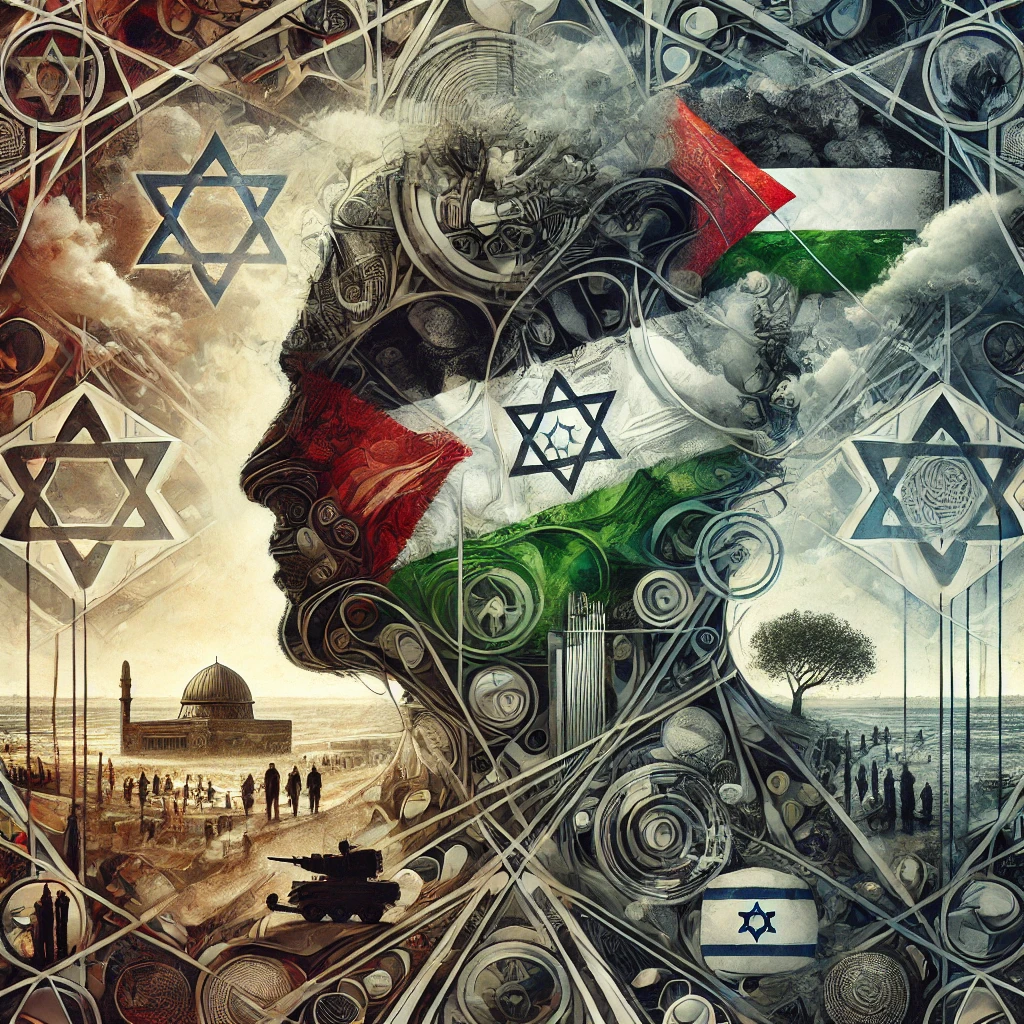
Oslo Accords: Their Impact on Israel-Palestine Peace Efforts
The Israel-Palestine Oslo Accords and the Quest for Peace
On September 9, 1993, a significant step was taken towards peace in the long-standing conflict with the signing of the Israel-Palestine Oslo Accords. This historic agreement marked the first face-to-face accord between the government of Israel and the leadership of the Palestine Liberation Organization (PLO). The promise of the Oslo Accords was not just political but also held implications for the spiritual and ethical landscapes of the region, deeply rooted in the rich religious traditions of both communities.
This analysis delves into the Oslo Accords by exploring how they align with the spiritual and ethical teachings of Islam and Judaism. By understanding these religious principles, we can gain deeper insights into the potential for lasting peace and the role of faith in bridging divides. This exploration seeks to not only recount the historical significance of the agreement but also to illuminate the spiritual dimensions that underscore the ongoing quest for reconciliation.
Historical Conflicts and Defensive Posture
To understand the complexities of the Oslo Accords, it is essential to first examine the historical tensions that have defined the Israeli-Palestinian landscape.
The conflict is deeply entrenched in historical, political, and territorial disputes that trace back to the early 20th century. The Balfour Declaration of 1917, which supported the establishment of a “national home for the Jewish people” in Palestine, sparked widespread opposition among the Arab population. The decades that followed saw escalating animosity and violence, culminating in the establishment of the State of Israel in 1948. This pivotal event led to the first Arab-Israeli War, often referred to by Palestinians as the Nakba or catastrophe, which resulted in the displacement of hundreds of thousands of Palestinians.
As the mid-20th century unfolded, tensions continued to escalate, leading to several major conflicts:
- 1948 Arab-Israeli War (War of Independence/Nakba): Initiated by the declaration of the State of Israel, this war saw attacks from Egypt, Jordan, Syria, and Iraq as they opposed the new state.
- Suez Crisis of 1956: In a strategic move, Israel, alongside the United Kingdom and France, attacked Egypt following Egypt’s nationalization of the Suez Canal.
- Six-Day War of 1967: Facing imminent threats from its neighbors, Israel launched preemptive strikes against Egypt, Jordan, and Syria, resulting in significant territorial gains including the West Bank, East Jerusalem, and the Gaza Strip.
- War of Attrition (1967-1970): A drawn-out conflict mainly between Israel and Egypt that included sporadic skirmishes with Syria and Jordan.
- Yom Kippur War of 1973: In a surprise attack on Yom Kippur, the holiest day in Judaism, Egypt and Syria sought to reclaim lost territories.
- 1982 Lebanon War: Israel invaded Lebanon to suppress the Palestine Liberation Organization (PLO), which was launching attacks from there.
Post Oslo Accord Conflicts:
- 2006 Lebanon War: This conflict involved skirmishes with Hezbollah, indicating ongoing regional instability.
- Gaza Conflicts: Including significant escalations in 2008-2009, 2012, 2014, and ongoing skirmishes.
- War post October 7, 2023 Terror Attack: A war broke out as a consequence of the terrorist attack by Hamas and taking hundreds of international civilian citizens as hostages.
Each of these conflicts has shaped national security policies and approaches to peace, emphasizing the state’s ongoing struggle for security and survival amidst a hostile regional environment. These historical confrontations set the stage for initiatives like the Oslo Accords, where leaders from both sides, spurred by international encouragement for peace, engaged in negotiations aimed at establishing a framework for coexistence and mutual recognition.
Core Principles of Islam and Judaism
These historical conflicts not only shaped the geopolitical realities of the region but also posed unique challenges to the religious and ethical values that both Islam and Judaism hold dear.
Both Islam and Judaism hold deep-seated teachings on peace, coexistence, and ethical treatment of others, which can provide a strong foundation for reconciliation and understanding.
Islamic Teachings on Peace and Coexistence
Islamic texts include verses that speak of harmony and ethical living, but the overall scriptural picture is more layered. Alongside calls for peace, the Qur’an also contains a notable set of verses—spread mainly across the Medinan period—that deal with conflict, warfare, and relations with communities outside the faith. These sections include guidance on fighting, defensive struggles, loyalty, and boundaries of coexistence, especially in situations where the early Muslim community faced political hostility.
Certain chapters, such as Surah 9, outline firm conditions for engaging with non-believers, reflecting the reality of a community negotiating survival, alliances, and threats. Because these themes appear consistently in the scripture, they influence how coexistence has historically been interpreted within Islamic tradition.
In simple terms, while Islam contains the language of peace, it also carries a structured approach to conflict. This duality shapes how different communities and scholars understand the limits and possibilities of coexistence—an important factor when examining peace efforts like the Oslo Accords. [Refer Annexure 1]
Jewish Teachings on Peace and Ethical Treatment
Judaism places a significant emphasis on the pursuit of peace, often regarded as the most peaceful and accommodating among the Abrahamic faiths. This sentiment is captured in the Hebrew phrase ‘Shalom’ (peace), which is both a common greeting and a profound ideal within the faith. The Torah reinforces this commitment to peace through teachings such as, “If you encounter your enemy’s ox or ass wandering, you must take it back to him” (Exodus 23:4). Further emphasizing the centrality of peace in Judaism, the Talmud states, “Great is peace, as all other precepts are for the sake of peace” (Mishnah Gittin 59b).
Analysis of Spiritual Principles Underpinning Peace Efforts
These teachings from both religions highlight a spiritual lineage that cherishes peace and righteous conduct. The Oslo Accords, by fostering dialogue and understanding between Israelis and Palestinians, mirror these religious principles. The agreements attempted to build a framework where both communities could coexist, each respecting the other’s right to live in dignity and peace, much in the spirit of their respective religious teachings. This spiritual perspective not only helps to understand the ethical dimensions of the accords but also illustrates how deeply held beliefs could serve as a bridge towards lasting peace.
Contemporary Challenges in Following Spiritual Principles
While the core teachings of Islam and Judaism advocate for peace and coexistence, their application faces significant obstacles in the volatile environment of the conflict.
In the Muslim community, the Quran’s extensive reach—comprising 6,236 verses across 114 chapters—includes repeated references to concepts like ‘enemy’ and ‘non-believer,’ which appear approximately 67 and 123 times respectively. The term ‘jihad’ surfaces 41 times, illustrating its dual interpretation in both combative and non-combative contexts. During periods like the Soviet-Afghan War, such texts were manipulated by global powers to promote an extremist version of Islam. This promotion has notably contributed to a significant rise in extremism within a portion of the Muslim population. While the majority of Muslims may not subscribe to such extremist interpretations, many find themselves either as silent spectators or silenced by the authoritative voice of extremists.
On the other hand, the Jewish community’s historical context, marked by survival threats during the Holocaust and subsequent existential threats from neighboring states, has often necessitated a security-first approach that may seem to deviate from the core teachings of peace in Judaism. Despite these deviations, efforts are made to adhere to these principles where feasible, such as upholding the rights of Muslims within Israeli borders, illustrating a complex but sincere commitment to their religious teachings in challenging circumstances.
These examples highlight the profound challenges both communities face in translating their spiritual ideals into action amid ongoing conflict and mistrust. They underscore the necessity for ongoing dialogue and innovative solutions that respect deeply held religious values while addressing contemporary geopolitical realities.
Consequences of the Oslo Accords
Understanding these spiritual and practical challenges sets the stage for evaluating the outcomes of the Oslo Accords and their impact on the ongoing peace process.
The Oslo Accords, while a monumental step in the peace process, yielded mixed outcomes. These consequences illustrate the complexities of implementing such agreements.
Immediate Outcomes
- Establishment of Palestinian Self-Governance: One of the immediate outcomes was the creation of the Palestinian Authority, which assumed responsibility for the administration of territory under its control.
- Reduction in Violence: Initially, there was a significant reduction in violence and hostilities, marked by hopeful prospects for lasting peace.
- Economic Cooperation: Economic relations between Israel and the newly formed Palestinian Authority saw improvements, with increased investment in Palestinian territories.
Broader Impact on the Peace Process
- Subsequent Agreements and Initiatives: The Oslo Accords paved the way for further negotiations, such as the Oslo II Agreement in 1995, which expanded Palestinian self-rule in the West Bank.
- Setbacks and Escalation of Violence: Despite initial positive outcomes, the peace process suffered significant setbacks. The assassination of Israeli Prime Minister Yitzhak Rabin in 1995 by a right-wing Israeli extremist was a major blow to peace efforts.
- Intifadas and Continued Conflict: The subsequent years saw the eruption of the Second Intifada in 2000, which was much more violent than the first, leading to severe degradation of trust between the parties.
International Reactions to the Oslo Accords
The mixed outcomes of the Oslo Accords invite scrutiny from the international community, whose diverse perspectives have shaped the subsequent dialogue and actions regarding the peace process.
Since their signing in 1993, the accords have elicited a wide array of reactions from the international community. Initially, these accords were largely celebrated in Western nations, with prominent support from the United States and the European Union.
- United States: The U.S. has played a fluctuating role as mediator, with its support evolving across different administrations. Initial optimism under President Clinton gave way to varying degrees of commitment in subsequent administrations.
- European Union: Consistently supportive of the Oslo framework, the EU has advocated for a negotiated two-state solution.
- African Nations: Many African countries have sympathized with the Palestinian cause, relating it to their own struggles against colonialism. However, diplomatic engagements have varied.
- Latin America: The region has shown a mixed response. While some countries like Brazil and Venezuela have historically supported Palestinian statehood strongly, others have sought to maintain balanced ties.
- Asian Countries: Nations such as India and China have maintained a cautious approach, emphasizing peaceful resolution through dialogue and supporting UN resolutions.
- Middle Eastern Neighbors: Apart from Egypt and Jordan, which have signed peace treaties with Israel, other Arab nations’ responses have evolved, especially with the recent Abraham Accords where countries like the UAE and Bahrain have normalized relations with Israel.
Current Status of the Conflict
The enduring conflict is not just a product of contemporary political and military disputes; it is deeply rooted in a historical context that continues to shape every facet of the ongoing struggle.
Recent Developments: October 7, 2023 Attack
On October 7, 2023, a significant escalation occurred when Hamas and several Palestinian militant groups launched a large-scale attack from the Gaza Strip into southern Israel. This was the first such invasion since the Arab-Israeli War in 1948. The attack resulted in devastating casualties and considerable destruction, prompting a severe response from Israel, including airstrikes and a declaration of a “long and difficult war” by Prime Minister Benjamin Netanyahu.
Humanitarian Situation
The ongoing conflict has led to a severe humanitarian crisis in Gaza, exacerbated by blockades and restricted access to essential resources. Hamas has been reported to use significant portions of its budget and resources, including international aid, for military activities rather than civilian needs. Additionally, Hamas is accused of using Palestinian civilians as human shields by situating military operations within densely populated civilian areas.
Broader Aspirations and Rhetoric
Phrases like “from the river to the sea,” historically used by some groups, have been interpreted as a call for the eradication of the state of Israel. This rhetoric is most closely associated with extremist factions and has been condemned internationally as it contradicts the goal of peaceful coexistence.
Role of International Players
- United Nations and International Law: The UN has repeatedly addressed the conflict, issuing resolutions aimed at promoting peace.
- United States: Traditionally a mediator, the U.S. faces criticism for perceived biases.
- European Union: The EU has consistently advocated for a negotiated two-state solution.
- Arab Nations: Recent years have seen shifts, such as the Abraham Accords.
Ethical and Spiritual Reflections
The peace process has been fraught with ethical challenges and profound spiritual lessons, serving as a testament to the complexities inherent in reconciling deeply held beliefs and historical grievances.
Ethical Challenges
- Justice and Fairness: One of the principal ethical challenges is addressing the perceptions and realities of justice and fairness. Both sides have legitimate grievances and historical wounds that demand acknowledgment.
- Right to Self-Determination: The struggle for self-determination is a core issue at the heart of the conflict. Both the Jewish claim to a homeland and Palestinian aspirations for statehood hold significant moral weight.
- Violence vs. Peace: The ethical quandary over the use of violence versus the pursuit of peace continues to be a contentious issue.
Spiritual Lessons
Forgiveness and Reconciliation: The peace process, though marked by setbacks, offers lessons in the power of forgiveness. Spiritual traditions from both Islam and Judaism promote forgiveness as a virtue.
Compassion and Empathy: Engaging with the ‘other’ requires a deep level of compassion and empathy, virtues taught extensively in both religious traditions.
Role of Religious Leaders and Communities
- Fostering Dialogue: Religious leaders have a unique authority to guide their communities toward peace by promoting dialogue based on mutual respect.
- Educational Initiatives: Religious education can be a powerful tool for promoting understanding and coexistence.
- Interfaith Initiatives: Joint interfaith initiatives can build bridges between communities, demonstrating shared values and common ground.
Reflections on the Oslo Accords
Reflecting on the Oslo Accords through a spiritual and ethical lens offers profound insights into the intricate interplay between deeply held beliefs and the pursuit of peace. The accords themselves, embodying principles of mutual recognition and steps towards self-governance, resonate with the core religious teachings of Islam and Judaism which prioritize peace, justice, and coexistence. However, the subsequent challenges and setbacks highlight the tension between idealism and realism.
The path towards lasting peace in the Middle East requires more than just political agreements; it necessitates a deep ethical and spiritual commitment from all parties involved. By considering the spiritual dimensions of peace agreements, we gain a more holistic understanding of what is required to transform entrenched conflicts.
Feature Image: Click here to view the image.
#OsloAccords #IsraelPalestineConflict #SpiritualDiplomacy #MiddleEastPeace #InterfaithDialogue
Refer Annexure 1
Scriptural Themes Related to Conflict in the Qur’an
(Methodology, Root Counts, and Comparative Notes)
Understanding how frequently the Qur’an engages with themes of conflict, war, enmity, victory, and confrontation requires a systematic method rather than impression or selective citation. The analysis below uses a root-based linguistic approach, which is the standard method in Qur’anic Arabic studies.
This annexure summarizes:
- How the ~7% figure was calculated
- Which Arabic roots were included and why
- How many verses correspond to these roots
- Why this matters in understanding scriptural framing of conflict
- How this compares to other Abrahamic scriptures
1. Methodology of Calculation
a) Why root analysis?
Arabic is a root-based language: words derive from triliteral roots that carry a common semantic field. For example:
- ق-ت-ل → kill, fight, warfare
- ج-ه-د → strive, exert effort, armed struggle
- ن-ص-ر → help, victory, support
- ف-ت-ح → open, conquer
- ع-د-و → enemy, hostility
- ح-ر-ب → war
By identifying all forms of these roots across the Qur’an, we can quantify:
- how often war-related themes occur
- in how many distinct verses
- how broad the semantic cluster is
This avoids cherry-picking and instead measures the full scope of scriptural vocabulary tied to conflict.
b) Data sources
The counts are drawn from well-established digital and academic concordances:
- Quranic Arabic Corpus (most authoritative root concordance)
- Tanzil text (verified Uthmani-script digital Qur’an)
- Project Root List
- Buckwalter Morphological Analyzer
Each root count is based on all derived forms, not just the simplest word.
c) Counting verses, not just words
A root may occur multiple times in a single verse.
For conflict-related analysis, the question is:
“In how many verses does any war-related root appear?”
This yields a clearer thematic picture.
d) Avoiding double counting
A verse may contain multiple conflict-related roots (e.g., “enemies” + “fighting”).
Therefore, when combining totals, duplicates were removed manually to estimate the unique verse count.
This produces the final ~420–450 verse range, which equals about 7% of the Qur’an’s 6,236 verses.
2. Roots Included and Their Rationale
A. Direct Conflict Roots
These explicitly refer to physical conflict:
| Root | Meaning | Approx. Verse Count |
|---|---|---|
| ق-ت-ل (q-t-l) | fight, kill | ~165 verses |
| ح-ر-ب (ḥ-r-b) | war | ~9 verses |
| ج-ه-د (j-h-d) | jihad, striving (often armed) | ~36 verses |
B. Strategic/Military Outcome Roots
These refer to the logic of victory, conquest, and defeat:
| Root | Meaning | Approx. Verse Count |
|---|---|---|
| ن-ص-ر (naṣr) | victory, divine help | ~72 verses |
| غ-ل-ب (gh-l-b) | overpower, defeat | ~27 verses |
| ف-ت-ح (fatḥ) | conquest/opening | ~30 verses |
C. Hostility / Boundary-Setting Roots
These shape the worldview of enmity and loyalty:
| Root | Meaning | Approx. Verse Count |
|---|---|---|
| ع-د-و (‘aduww) | enemy, hostility | ~90–95 verses |
| ق-س-م (qasam) | divisions, ranks, oaths | ~8 verses |
These are integral to how the Qur’an conceptualizes conflict—sometimes physical, sometimes ideological, sometimes communal.
3. Combined Count and Final Percentage
Unique verse total (after removing duplicates):
≈ 420–450 verses
Percentage of Qur’an:
450 / 6,236 ≈ 7.2%
Interpretation:
These are verses explicitly referencing:
- war
- fighting
- killing
- enemies
- battle outcomes
- victory or defeat
- conquest
- or hostility
This does not include metaphorical conflict or eschatological battles, which would increase the percentage further.
4. Contextual Notes
a) Concentration in Medinan surahs
The war/conflict vocabulary appears most frequently in:
- Surah 2 (Al-Baqarah)
- Surah 4 (An-Nisa)
- Surah 8 (Al-Anfal)
- Surah 9 (At-Tawbah)
- Surah 33 (Al-Ahzab)
- Surah 47 (Muhammad)
- Surah 48 (Al-Fath)
These chapters correspond to:
- periods of war,
- the formation of a new political community,
- conflict with Quraysh and Jewish tribes,
- treaty management,
- and state-building.
b) Why this matters
The presence of this thematic cluster:
- shapes Islamic jurisprudence on warfare
- influences interpretations of coexistence
- contributes to the ethos of conditional relations with non-believers
- impacts historical and modern Muslim political thought
It does not define Islam as a whole, but it is essential context for any discussion of peace processes in which scriptural framing plays a role.
5. Comparative Perspective: Judaism & Christianity
Hebrew Bible (Old Testament)
- Contains numerous war narratives (Joshua, Judges, Samuel, Kings).
- Warfare vocabulary appears in hundreds of verses, but exact root-based counts are not yet standardized.
- The warfare burden is narrative-heavy more than lexical-heavy.
New Testament
- Few references to physical war.
- Conflict language tends to be metaphorical (“spiritual warfare”).
- Militaristic vocabulary is minimal compared to the Qur’an and the Hebrew Bible.
Conclusion of Comparison
- The Hebrew Bible contains the most extensive war narratives.
- The Qur’an contains the most quantifiable war/conflict vocabulary (≈7%).
- The New Testament contains the least physical-war content.
This tri-text comparison helps contextualize the Qur’an’s thematic profile within the broader Abrahamic tradition.
Annexure Summary
- A systematic root-based count shows ≈7% of Qur’anic verses contain war/conflict vocabulary.
- The analysis uses standard linguistic tools and removes duplicate verse counting.
- This cluster is primarily located in Medinan surahs.
- The thematic density contributes to how Islamic tradition interprets conflict and coexistence.
- Compared to other Abrahamic scriptures, the Qur’an has a distinct and measurable conflict lexicon.
Glossary of Terms
- Oslo Accords (1993): A set of agreements between Israel and the Palestine Liberation Organization (PLO), establishing mutual recognition and outlining a framework for future negotiations.
- PLO (Palestine Liberation Organization): An umbrella political organization representing the Palestinian people in diplomatic, political, and, historically, armed struggles.
- Nakba (“Catastrophe”): The term used by Palestinians to describe the mass displacement that occurred during the 1948 Arab–Israeli War.
- War of Independence (Israel): The Israeli term for the 1948 Arab–Israeli War, marking the creation of the State of Israel.
- Preemptive Strike: A military attack launched to neutralize an anticipated threat before it materializes, such as Israel’s opening action in the Six-Day War.
- Intifada: Arabic for “uprising,” referring to Palestinian mass unrest and violence against Israeli presence (First Intifada 1987–1993; Second Intifada 2000–2005).
- Hamas: An Islamist political and militant organization governing Gaza since 2007, designated as a terrorist group by the US, EU, and several others.
- Hezbollah: A Lebanese Shi’a militant and political organization backed by Iran, frequently involved in conflict with Israel.
- Medinan Surahs: Chapters of the Qur’an revealed in Medina, often addressing governance, community organization, conflict, and laws.
- Surah 9 (At-Tawbah): A Medinan chapter of the Qur’an notable for its guidance on treaties, conflict, and relations with non-believers; it uniquely lacks the opening Bismillah.
- Jihad (جهاد): Literally “striving” or “struggle”; includes spiritual effort but historically also refers to armed struggle under specific conditions.
- Qur’anic Roots: Triliteral Arabic consonant sets from which multiple words derive, used to study thematic frequency (e.g., q-t-l, j-h-d, ḥ-r-b).
- Shalom: Hebrew term meaning “peace,” used both as a greeting and a guiding ethical principle in Judaism.
- Torah: The foundational scriptures of Judaism, comprising the first five books of the Hebrew Bible.
- Talmud: The central text of Rabbinic Judaism, containing legal discussions and ethical teachings.
- Abraham Accords (2020): A series of normalization agreements between Israel and several Arab states (UAE, Bahrain, Morocco, Sudan).
- Palestinian Authority (PA): The interim self-government body established by the Oslo Accords to administer parts of the West Bank and Gaza.
- Two-State Solution: A proposed resolution envisioning an independent State of Palestine alongside the State of Israel.
- “From the River to the Sea”: A slogan interpreted by some as a call for Palestinian liberation and by others as a rejection of Israel’s existence.
- IDF (Israel Defense Forces): Israel’s military force, responsible for defense and security operations.
- UN Resolutions (Israel–Palestine): International legal and diplomatic statements calling for ceasefires, negotiations, humanitarian access, and long-term solutions.
- Geopolitical Mediation: The involvement of global actors (e.g., US, EU, UN) in facilitating or pressuring negotiations.
- Ethical Self-Determination: The principle that communities have a moral right to form their own political identity and governance structure.
- Humanitarian Crisis: Severe threats to civilian life due to conflict, including shortages of food, water, shelter, and medical care.
- Interfaith Dialogue: Cooperative engagement between different religious communities aimed at fostering understanding and peace.
References
Follow us:
- English YouTube: https://www.youtube.com/@Hinduofficialstation
- Hindi YouTube: https://www.youtube.com/@HinduinfopediaIn
- X: https://x.com/HinduInfopedia
- Instagram: https://www.instagram.com/hinduinfopedia/
- Facebook: https://www.facebook.com/Hinduinfopediaofficial
- Threads: https://www.threads.com/@hinduinfopedia
[…] Oslo Accords: Their Impact on Israel–Palestine Peace Efforts […]
[…] Oslo Accords: Their Impact on Israel–Palestine Peace Efforts […]