


Religious Tolerance Algorithms: How Digital Platforms Enforce Sacred Immunity
Part VI of Balancing Sacred Text Reverence with Democratic Transparency
How Tech Platforms Enforce Sacred Text Protection Through Algorithms
Sacred Texts vs Universal Rights: The Global Dilemma.
In our previous blogs, we explored how taqiyya, or strategic religious dissimulation, has been used to reshape global norms — from legal systems to human rights frameworks. Today, we turn to its digital extension: a new form of curated religious tolerance that is not built on mutual respect, but on algorithmic enforcement. Far from enabling open discourse, this system shields particular ideologies — especially Islam — from scrutiny, embedding selective protection into the very code that governs our information ecosystems.
This blog will uncover how tech platforms, fact-checkers, and moderation policies work together to create a sacred immunity zone — one that hides critical content, promotes sanitized narratives, and punishes dissent, not for violating truth, but for challenging the preferred ideological lens. We explore how religious tolerance is no longer a democratic ideal, but a controlled variable in a broader system of narrative warfare.
Algorithmic Enforcement of Religious Tolerance
In our previous discussions, particularly in International Law Under Siege, we explored how the principle of taqiyya can undermine international legal frameworks by enabling strategic deception. Today, this same principle finds a new, more powerful home within the architecture of our digital platforms. Algorithms, which govern everything from search results to social media feeds, are now the primary enforcers of this sacred immunity.
Search result manipulation protecting Islamic narratives
Digital platforms increasingly curate search results to prioritize narratives that align with “moderate” or widely accepted interpretations of Islamic teachings. Queries related to controversial doctrines or historical events within Islam often yield results from sources that engage in ideological sanitization—offering softened or selectively framed explanations. For example, a search for ‘jihad’ might overwhelmingly return results focused on its spiritual meaning, effectively burying content that addresses its more violent interpretations or historical applications. This manipulation creates a public-facing narrative curated for a non-Muslim audience, reflecting a broader pattern of narrative shielding.
How “fact-checkers” apply taqiyya principles
Fact-checking organizations, once envisioned as neutral truth arbiters, now function as narrative gatekeepers within platform moderation ecosystems. In practice, many selectively enforce a curated version of religious tolerance—often shielding specific ideologies, especially Islam, from critical examination.
This trend is especially visible in the Indian digital landscape, where platforms like Alt News have gained prominence. Rather than applying uniform standards of verification, critiques of Islamic doctrine are frequently flagged as “hate speech,” “missing context,” or misinformation—even when such critiques are grounded in scholarship or legal analysis. This ideological sanitization reshapes content moderation into a form of algorithmic protectionism.
Consider the 2021 West Bengal election violence, when Alt News debunked a viral claim of “anti-Hindu genocide” by proving the clips were from Bangladesh. While the fact-check itself was valid, the selective attention highlights a pattern: scrutiny is swift when Hindu narratives go viral, but far less consistent when Islamic misrepresentations circulate.
Similarly, during the Israel–Gaza conflict in 2023, Alt News report claimed that 40% of misinformation in India targeted Muslims. While fighting falsehoods is crucial, the algorithmic response—broad moderation justifications based on communal data—further justifies enhanced censorship under the banner of “tolerance.” Yet, false or inflammatory content targeting Hindus rarely receives comparable visibility or platform response.
Another stark example lies in the arrest of Alt News co-founder Mohammed Zubair in June 2022, following a video post calling out a political spokesperson’s remarks. While this incident drew global attention on free speech, it paradoxically demonstrated that critique of anti-Muslim content can prompt state action, whereas scrutiny of Islamic doctrine itself is algorithmically buried or preemptively flagged.
These patterns mirror the algorithmic dissimulation explored earlier—a digital enactment of taqiyya principles. Fact-checking has evolved beyond detecting falsehoods; it now curates public discourse through ideological lenses.
In such an environment, religious tolerance shifts from being a civic virtue to becoming a platform-enforced norm, one that determines not just what is said, but what is allowed to be thought.
How Platform Policies Define Acceptable Religious Tolerance
Content policies at major tech companies are often shaped by collaborations with Islamic organizations. This leads to a systematic favoritism toward “moderate” or officially sanctioned voices. Academics, journalists, and activists who critique Islamic doctrines from a position of scholarly expertise are often suppressed, while prominent Muslim influencers who promote a benign narrative are amplified. This creates a digital information ecosystem where the accepted discourse is pre-approved, sidelining any serious internal or external debate.
Suppression of internal Islamic discourse contradicting external presentations
The algorithmic dissimulation goes further by actively suppressing internal Islamic discourse that might contradict the external presentation.
A textbook illustration of algorithmic narrative shielding is visible in how certain content is moderated based on audience and ideological framing. For instance, while moderate or scholarly critiques of Sharia law risk being flagged as “hate speech” when viewed by non-Muslim audiences, ideologically intense content often avoids scrutiny when directed inward. A striking case is that of Ahmad Musa Jibril, a U.S.-based Muslim preacher whose videos remained online for years, despite being linked to radicalized individuals involved in terror attacks like the 2017 London Bridge incident. Jibril’s content, while carefully worded to avoid direct incitement, preached a hardline interpretation of Islamic governance. YouTube only restricted some of his content after sustained public pressure, not algorithmic enforcement—highlighting the selective application of moderation protocols. Reference: BBC News – YouTube preacher ‘influenced London attacker’
The Technical Mechanism
The enforcement of this algorithmic sacred immunity is not a result of a single policy but a combination of technical mechanisms embedded deep within the platforms’ code. These mechanisms create a digital environment where certain narratives are automatically protected and others are automatically censored.
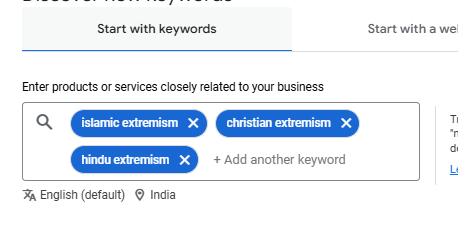
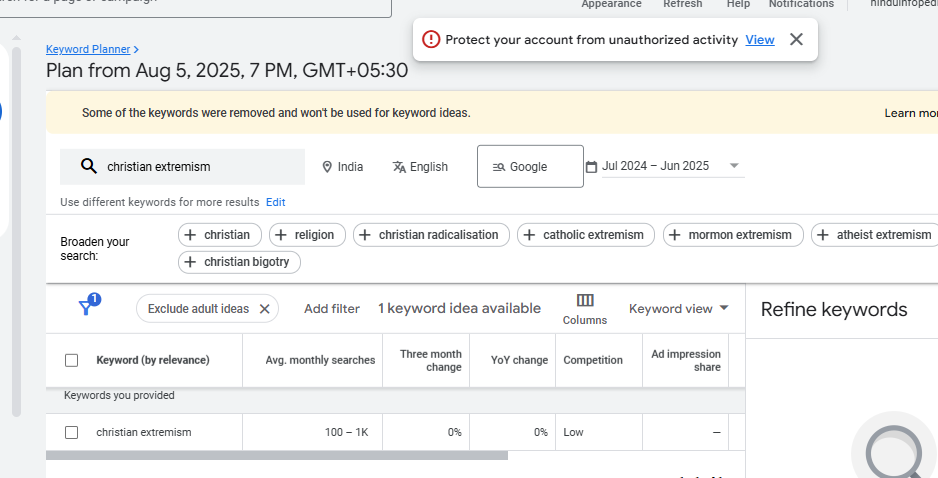
Content moderation bias: rapid action against anti-Islamic content
Shadow banning scholars and journalists investigating Islamic doctrine
Shadow banning—though often denied by platforms—is functionally acknowledged under terms like “visibility filtering” and “content demotion.” Internal documents and congressional testimonies confirm that platforms reduce the reach of content deemed “borderline” or “sensitive,” even if it doesn’t violate any rules. Content related to Islamic doctrine, especially when critical or analytical, often falls into this suppressed category. At the same time, recommendation algorithms boost voices promoting sanitized or officially endorsed narratives of Islam. This dual mechanism—quiet suppression of dissent and active amplification of dissimulation—creates a digital environment where one narrative is favored by design, not by merit.
Amplification algorithms promoting dissimulating voices
The flip side of shadow banning is algorithmic amplification. Platforms’ recommendation engines are programmed to promote voices that align with the sanitized narrative. This means that videos, articles, and profiles that present a benign, often dissimulating, view of Islam are given a disproportionate amount of exposure. This creates a feedback loop where users are funneled towards content that reinforces the approved narrative, making it difficult to find dissenting or critical perspectives.
“Community standards” reflecting Islamic blasphemy concepts
The most foundational technical mechanism is the design of ‘community standards’ themselves. These rules are increasingly reflecting concepts found in Islamic blasphemy laws, such as the prohibition of insulting the Prophet Muhammad. Academic papers and reports from organizations like the UN and the EU explicitly draw parallels between the vagueness of hate speech laws and blasphemy laws, and warn of the potential for abuse. The debates surrounding the UN Strategy and Plan of Action on Hate Speech, for example, highlight this critical issue. While platforms present community standards as neutral, their disproportionately strict application toward critiques of Islamic doctrine suggests otherwise. As previously covered in our Blog Islam Religion in Media, rather than ensuring universal safeguards, these policies often reflect selective ideological filters—especially when content touches upon Islamic tenets—digital extensions of blasphemy norms under a secular guise.
The Information Warfare
The algorithmic manipulation described in the previous sections is not a purely technical phenomenon; it is a battleground of information warfare. Religious and political groups, understanding the vulnerabilities of digital platforms, are actively leveraging these systems to enforce their desired narratives.
Coordinated reporting campaigns silencing critics:
This is a key tactic where organized groups, often with official backing, weaponize a platform’s own moderation tools. Members of these groups are trained to mass-report content and accounts critical of Islam as “hate speech” or “harassment.” The sheer volume of these coordinated reports triggers automated moderation systems, leading to the rapid removal of posts and the suspension or permanent banning of users. This creates a powerful chilling effect, making it professionally and socially risky for academics, journalists, and public figures to engage in critical inquiry. This strategy turns the platforms’ own “community standards” into a siege weapon.
Islamic organization partnerships with tech platforms:
The digital enforcement of “sacred immunity” is institutionalized through formal partnerships. Tech giants often collaborate with and fund certain Islamic organizations to advise on content moderation policies and help identify “hate speech.” However, these partnerships are often criticized for their lack of transparency and for creating a potential for bias due to the influence of specific lobbying groups. This has led to the perception that these organizations are granted a powerful veto, embedding a systemic bias into the very rules of the digital public square that protects specific religious narratives.
Training programs for Muslim social media activists:
The operational side of this information warfare is a well-oiled machine. Islamic organizations run training programs to teach social media activists how to optimally utilize platform algorithms to amplify “positive” narratives and promote religious tolerance. The existence of these programs is believed by some to be the ‘human capital’ that makes large-scale, coordinated reporting campaigns against dissenting voices possible. These trained activists act as a parallel enforcement mechanism, working to control the online conversation and punish dissenters in tandem with the algorithmic biases.
Some Organizations are:
- MEND (Muslim Engagement & Development, UK)
- Imams Online (UK, Faith Associates)
- Muslim Advocates (USA)
- IIFSO (International Islamic Federation of Student Organizations)
- AFMY (Asian Federation of Muslim Youth)
Strategic use of “hate speech” reporting to eliminate opposition research:
As we explored in Blog The Human Rights Paradox and Blog Islam Religion in Media, the term “hate speech” is not always a neutral designation; it is a political weapon. In the context of digital platforms, this weapon is deployed to eliminate legitimate opposition research. Scholarly inquiry, data-driven analysis of demographics, or critical discussions of doctrine are often preemptively labeled as “hate speech.” This allows for the removal of content that is factually accurate but ideologically inconvenient, effectively shutting down the very research and analysis necessary for a healthy democratic society.
The Systemic Threat to Democratic and Religious Tolerance
The culmination of algorithmic dissimulation, content moderation bias, and organized information warfare presents a systemic threat that goes far beyond the digital realm. These mechanisms are reconfiguring the very foundations of how we think, debate, and govern ourselves.
How algorithmic dissimulation affects democratic processes
A healthy democracy relies on a well-informed citizenry and a robust marketplace of ideas. Algorithmic dissimulation directly undermines this by creating a distorted public reality. The average citizen, relying on sanitized search results and censored social media feeds, is prevented from accessing critical information. This “narrative firewall,” as we termed it in Blog Religious Demographics in Action Part II, creates a form of “electoral blindness.” Voters and policymakers, unaware of the full spectrum of issues and internal debates within certain communities, make decisions based on incomplete and curated information. This leads to policy capitulation and institutional paralysis, as seen in the French government’s response to riots discussed in Blog Religious Demographics in Action.
The creation of parallel information ecosystems
The most profound consequence of these trends is the creation of separate, parallel information ecosystems. For the non-Muslim public, platforms provide a curated, anodyne view of Islam, focusing on themes of peace, religious tolerance, and diversity. However, within a less-visible ecosystem, unfiltered and sometimes more extreme interpretations of doctrine flourish. This algorithmic bifurcation of discourse means that two different realities exist simultaneously, with no meaningful overlap. It erodes any possibility of shared understanding or genuine dialogue, making it impossible to address real-world conflicts or ideological differences.
Long-term consequences for Western intellectual traditions
At its core, this systemic protection of religious narratives is an assault on Western intellectual traditions. The Enlightenment principles of free inquiry, critical thinking, and the right to question all beliefs—even the most sacred—are being replaced by a digital version of blasphemy law. By systematically punishing dissent and censoring critical research, platforms are training an entire generation to self-censor. The ability to engage in uncomfortable but necessary intellectual work is being lost, leading to a new form of intellectual surrender.
Potential solutions and platform accountability
Addressing this threat requires a multi-pronged approach. First, we must demand algorithmic transparency. Platforms must be held accountable for the biases embedded in their systems. This means third-party audits of content moderation and amplification algorithms to ensure they are not systematically favoring one narrative over another. Second, the legal framework must evolve. Governments and international bodies must re-evaluate “hate speech” legislation to ensure it protects legitimate criticism and academic inquiry rather than being used as a tool to enforce religious immunity. Finally, there must be a cultural shift, where individuals recognize that digital platforms are not neutral and that the information they consume is a carefully managed product of algorithmic design and information warfare. The first step to resisting this new form of sacred immunity is to acknowledge that it exists.
Reflections on Manipulation of Religious Tolerance Around the Globe
The expansion of algorithmic dissimulation from backend filters to public discourse curators like fact-checkers, influencer partnerships, and algorithmic amplification reflects a systemic shift in how truth is mediated. This isn’t just about technology — it’s about who controls the narrative, and what ideologies are granted immunity from scrutiny.
As seen with Alt News, keyword suppression by a search engine, content bifurcation strategies, and shadow banning of dissent, platforms no longer behave as neutral conduits of information. Instead, they are active agents in curating religious tolerance — often by suppressing legitimate research and criticism, while elevating benign or ideologically aligned narratives.
The long-term implications are profound: academic freedom erodes, policy becomes uninformed, and digital literacy collapses into digital orthodoxy. Most dangerously, these systems normalize a new kind of blasphemy code—coded not into lawbooks, but into algorithms and moderation protocols.
To restore balance, we must demand transparency, third-party audits, and an honest reckoning with the invisible hands shaping digital discourse. Until then, the digital public square remains a place of curated perception—not of free thought.
Feature Image: Click here to view the image.
Videos:
Glossary of Terms
- Religious Tolerance Algorithms: A term used to describe the coded mechanisms within digital platforms that selectively protect religious ideologies, particularly Islam, from criticism or scrutiny.
- Sacred Immunity: The condition where certain religious doctrines or narratives are protected from open discussion, critique, or academic analysis through informal or institutional censorship.
- Taqiyya: An Islamic doctrine allowing Muslims to conceal their faith or beliefs when under threat. The blog discusses its digital manifestation as narrative dissimulation online.
- Narrative Firewall: A metaphorical barrier created by media, legal, or algorithmic systems that filters or blocks certain types of information from public access or discussion.
- Shadow Banning: A practice where a user’s content is hidden or restricted in visibility without their knowledge, used by platforms to reduce the spread of certain viewpoints without outright bans.
- Content Demotion: A platform moderation tactic that algorithmically reduces the reach or visibility of specific content deemed “borderline” or sensitive.
- Visibility Filtering: An internal platform practice of quietly reducing the exposure of certain posts or accounts, often based on subjective criteria.
- Community Standards: Guidelines set by digital platforms governing user behavior and content, which in some cases reflect ideologically or religiously motivated biases.
- Algorithmic Amplification: The process by which platforms’ recommendation systems disproportionately promote certain content, often favoring sanitized or officially endorsed religious narratives.
- Coordinated Reporting Campaigns: Organized efforts by online groups to mass-report posts or users to trigger moderation tools and suppress dissenting views.
- Blasphemy Norms: Religious or cultural rules that forbid criticism of sacred figures or doctrines; referenced here in the context of digital content policies mimicking these norms.
- Electoral Blindness: A situation where voters are unable to make informed decisions due to lack of access to diverse or truthful information, often due to narrative control.
- Information Warfare: The strategic use of information—often through media, digital tools, or social networks—to influence, manipulate, or suppress public perception and debate.
- Moderate Voices: In this context, refers to religious influencers or spokespersons who present ideologically acceptable or sanitized narratives that align with platform or institutional policies.
- Islamic Organization Partnerships: Collaborations between digital platforms and Islamic advocacy groups to shape moderation policies and define hate speech boundaries.
- Digital Blasphemy Law: A term used to describe platform policies or moderation practices that effectively mimic religious blasphemy restrictions under a secular or neutral guise.
- Human Capital in Activism: Trained individuals or groups mobilized by ideological organizations to influence digital spaces through content creation, reporting, and amplification.
- Fact-Checking Enforcement: The selective application of “fact-checking” mechanisms by partnered organizations to shield certain religious content while censoring criticism.
- Parallel Information Ecosystems: The existence of two or more segregated knowledge spheres—one for public consumption, and another for internal religious discourse—enabled by algorithmic controls.
- Intellectual Surrender: The gradual loss of critical inquiry and open discussion due to self-censorship and institutional enforcement of sacred immunity.
#ReligiousTolerance #AlgorithmBias #DigitalCensorship #FreedomOfSpeech #HinduinfoPedia #BalancingSacredTextReverencewithDemocraticTransparency
#SacredTextsvsUniversalRights
🛡️ Disclaimer
This blog offers a critical perspective on digital platform behavior through a specific ideological lens. It aims to spark debate on how algorithms shape religious discourse and public understanding. Readers are encouraged to engage, question, and explore alternative viewpoints.
References:
- For the claim about “Community standards” reflecting blasphemy laws: https://scholarlycommons.law.emory.edu/eilr/vol35/iss2/1/
- For the claim about “Islamic organization partnerships” and lack of transparency: https://internews.org/resource/private-tech-sector-engagement-with-global-civil-society/
- For the claim about coordinated reporting campaigns: https://www.occrp.org/en/news/report-coordinated-social-media-campaigns-from-oil-rich-arabic-states-spread-climate-denial
- For the claim about content moderation bias and asymmetric moderation: https://www.occrp.org/en/news/report-coordinated-social-media-campaigns-from-oil-rich-arabic-states-spread-climate-denial
- For the claim about algorithmic amplification: https://www.orfonline.org/expert-speak/from-clicks-to-chaos-how-social-media-algorithms-amplify-extremism
Additional References
- Search Result Manipulation Favoring Sanitized Islamic Narratives
- 📘 Combating Fake News and Misinformation from an Islamic Ethical Perspective This paper discusses how digital platforms can distort religious narratives through algorithmic prioritization and misinformation. It highlights the ethical implications of curated content and filter bubbles, especially in relation to Islamic teachings.
- 📘 The Demonization of Islam through Social Media Offers empirical evidence on how social media platforms shape perceptions of Islam, often through selective amplification or suppression of content, contributing to either sanitized or demonized narratives.
- Islamic Organization Partnerships with Platforms Influencing Moderation
- 📘 Cyber-Islamic Moderation in Indonesia Explores how platforms like https://islami.co/ and id collaborate with Islamic organizations to promote moderate narratives, showing how partnerships shape digital discourse.
- 📘 Digital Strategies for Promoting Religious Moderation Details how major Islamic organizations like Muhammadiyah and Nahdlatul Ulama use social media to influence moderation policies and public perception.
- Strategic Use of “Hate Speech” to Suppress Opposition Research
- 📘 UN Strategy and Plan of Action on Hate Speech Highlights how vague definitions of hate speech can be weaponized to suppress dissent and legitimate inquiry, aligning with your blog’s critique.
- 📘 Thirty Years of Research into Hate Speech Analyzes how hate speech definitions vary and can be manipulated, especially in digital moderation contexts, reinforcing concerns about ideological filtering.
- 📘 Political Communication Strategies and Hate Speech Discusses how hate speech is strategically used in political contexts to silence opposition and manipulate public discourse.
Previous Blog of the Series
- https://hinduinfopedia.com/international-law-under-siege/
- https://hinduinfopedia.com/human-rights-paradox/
- https://hinduinfopedia.com/fastest-growing-religion/
- https://hinduinfopedia.com/religious-demographics-in-action/
- https://hinduinfopedia.com/religious-demographics-in-action-part-ii/
- https://hinduinfopedia.com/islam-religion-in-media/
Other Related Blogs
- https://hinduinfopedia.com/population-growth-or-jihad/
- https://hinduinfopedia.com/population-trends-and-the-power-of-belief/
- https://hinduinfopedia.com/fertility-and-faith-when-welfare-rewards-the-womb/
- https://hinduinfopedia.com/fertility-and-muslim-growth-state-benefits-benefit-population-growth/
- https://hinduinfopedia.com/population-dividend-or-demographic-risk/
- https://hinduinfopedia.com/halal-food-or-exclusivist-agenda-faith-commerce-intersection/
- https://hinduinfopedia.in/waqf-amendment-act-2025-reform/
- https://hinduinfopedia.in/waqf-act-protests/
- https://hinduinfopedia.in/waqf-act-debate/
- https://hinduinfopedia.in/protests-against-waqf-act-2025/
- https://hinduinfopedia.in/waqf-act-unrest-is-this-just-about-waqf/
- https://hinduinfopedia.in/judicial-response-to-waqf-act-unrest/
- https://hinduinfopedia.in/waqf-act-and-judging-justice/
- https://hinduinfopedia.in/selective-judgement-of-waqf-act/
- https://hinduinfopedia.in/waqf-law-an-excuse/
- https://hinduinfopedia.in/safety-sharia-and-stark-realities/
- https://hinduinfopedia.in/sharia-law-in-practice/
- https://hinduinfopedia.in/quran-quote-that-sparked-a-firestorm-rubika-and-the-fear-of-facts/
- https://hinduinfopedia.com/islamic-marriage-and-deceptive-conversions/
[…] operation of religious tolerance algorithms on social and news platforms—separate from editorial decisions—can downrank, demonetize, or […]
[…] https://hinduinfopedia.com/religious-tolerance-algorithms/ […]
[…] As I explored in my analysis of Islam’s representation in media and the operation of religious tolerance algorithms, there are sophisticated mechanisms at work that suppress documentation and analysis of demographic […]
[…] https://hinduinfopedia.com/religious-tolerance-algorithms/ […]
[…] avoidance – Scholars skip critical analysis due to religious tolerance algorithms that prevent honest […]
[…] as proof of doctrine in action—non-believers have no rights that Muslims must respect. The religious tolerance algorithms that prevent honest discussion enabled decades of abuse. This is clearly visible through media […]
[…] https://hinduinfopedia.com/religious-tolerance-algorithms/ […]
[…] Religious Tolerance Algorithms investigation revealed how digital tools transform small groups into apparently massive […]
[…] the pattern documented in media’s role as manipulator framework, coordinated suppression suppression of facts appears most […]
[…] कि मीडिया की “हेरफेरकर्ता” भूमिका ढांचे…में दर्ज पैटर्न दिखाता है, तथ्यों का […]
[…] equal rights recognition becomes theologically impossible. This explains why challenges to religious tolerance frameworks face systematic resistance when they expose this classification […]
[…] रूप से असंभव हो जाती है। यही कारण है कि धार्मिक सहिष्णुता के ढाँचों को चुनौती देने पर व्यवस्थित प्रतिरोध […]
[…] asymmetric protection 🔹 Human Rights Paradox – Universal rights selectively applied 🔹 Religious Tolerance Algorithms – How media manufactures selective […]
[…] अधिकारों का चयनात्मक अनुप्रयोग धार्मिक सहिष्णुता एल्गोरिदम – मीडिया कैसे चयनात्मक आक्रोश का […]
[…] Legal Frameworks ➡️ Fastest Growing Religion: Europe’s Demographic Transformation ➡️ Religious Tolerance Algorithms “The framework the mainstream won’t […]
[…] standard is absolute, proving that under the current Global Narrative, violence combined with Religious Tolerance Algorithms is a winning […]
[…] https://hinduinfopedia.com/religious-tolerance-algorithms/ […]
[…] when Islamic sensitivities are involved. These institutionalized restrictions demonstrate how religious tolerance algorithms prevent honest discourse through systematic editorial […]
[…] देता है। इस प्रकार की व्यवस्थाओं को धार्मिक सहिष्णुता एल्गोरिदम के व्यापक प्रभावों से जोड़ा जाता […]
[…] excluding comparative analysis with secular legal systems. This curricular control demonstrates how religious tolerance algorithms prevent honest discourse by making critical analysis professionally […]
[…] academic perversion follows the same pattern we documented in our investigation of religious tolerance algorithms and how Islam is treated in Western media—where institutional frameworks designed for universal […]
[…] https://hinduinfopedia.com/religious-tolerance-algorithms/ […]
[…] https://hinduinfopedia.com/religious-tolerance-algorithms/ […]