

Science of Vedic Astronomy: Cultural Impacts
Exploring Science of Vedic Astronomy
In the final installment of our series on the “Surya Siddhanta”, we turn our focus to the profound cultural impacts of astronomy as outlined in this ancient text. After exploring the sophisticated tools and mathematical techniques in the previous blog, we now examine how these astronomical insights were woven into the fabric of Vedic society, influencing cultural practices, rituals, and everyday life.
Science of Vedic Astronomy in Vedic Culture
Astronomical knowledge in ancient India was not confined to scholarly pursuits; it permeated every aspect of daily life. From determining the auspicious dates for sowing seeds and conducting weddings to planning major architectural projects, the principles outlined in the “Surya Siddhanta” guided countless aspects of social and religious life. This integration illustrates the holistic view of the universe in Vedic culture, where celestial movements were seen as a mirror of earthly dynamics.
Role of Science of Vedic Astronomy in Rituals and Calendars
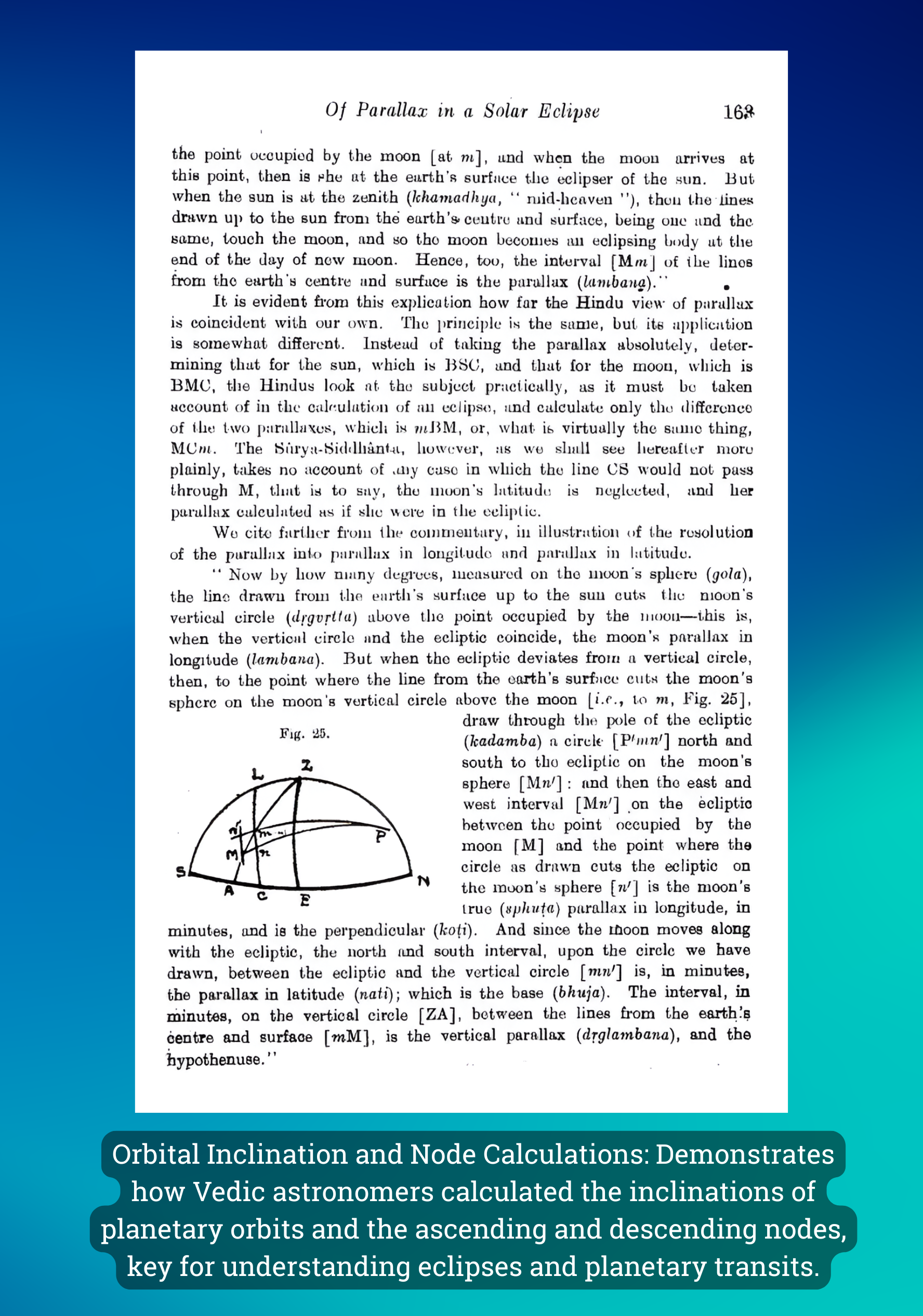
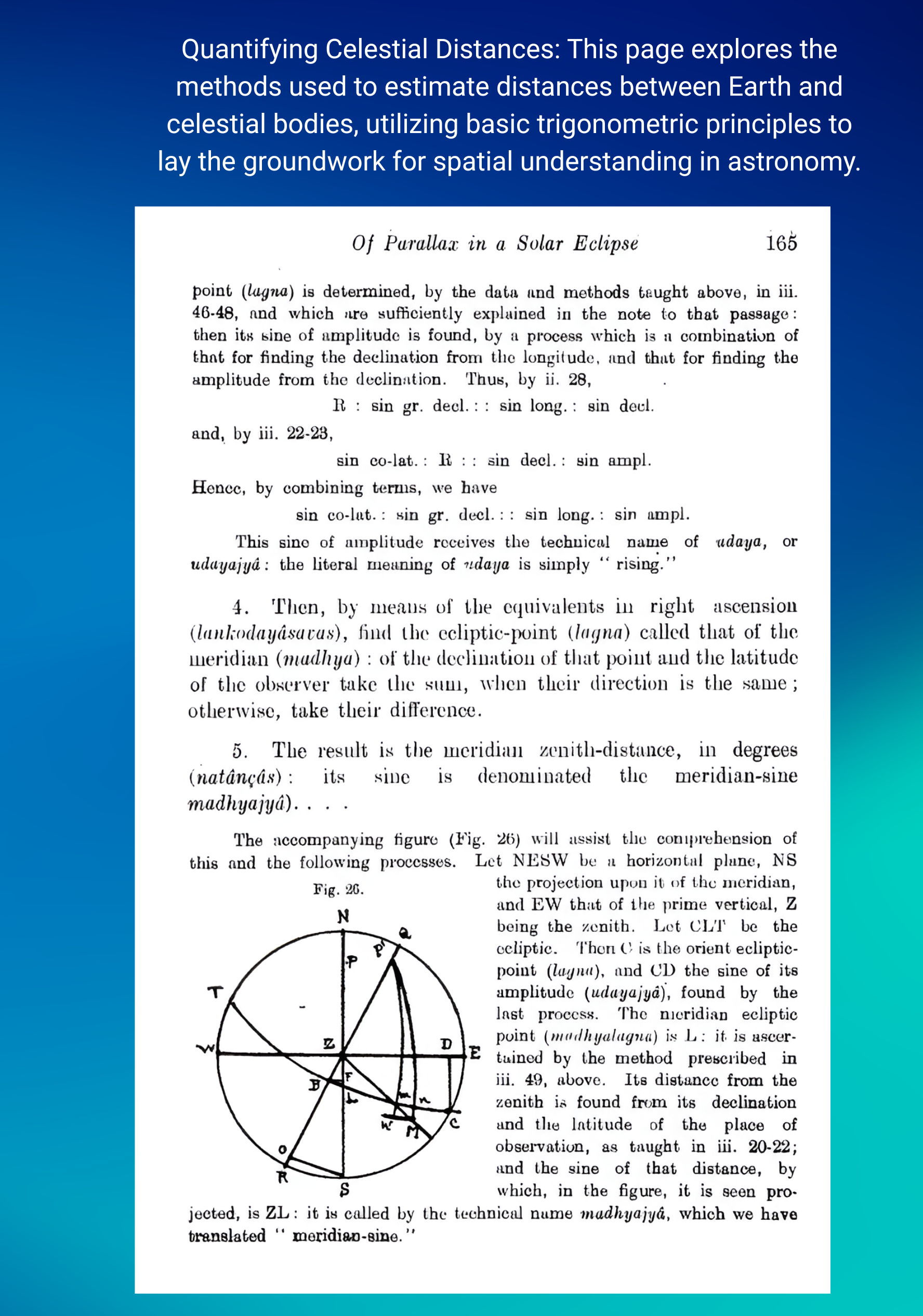
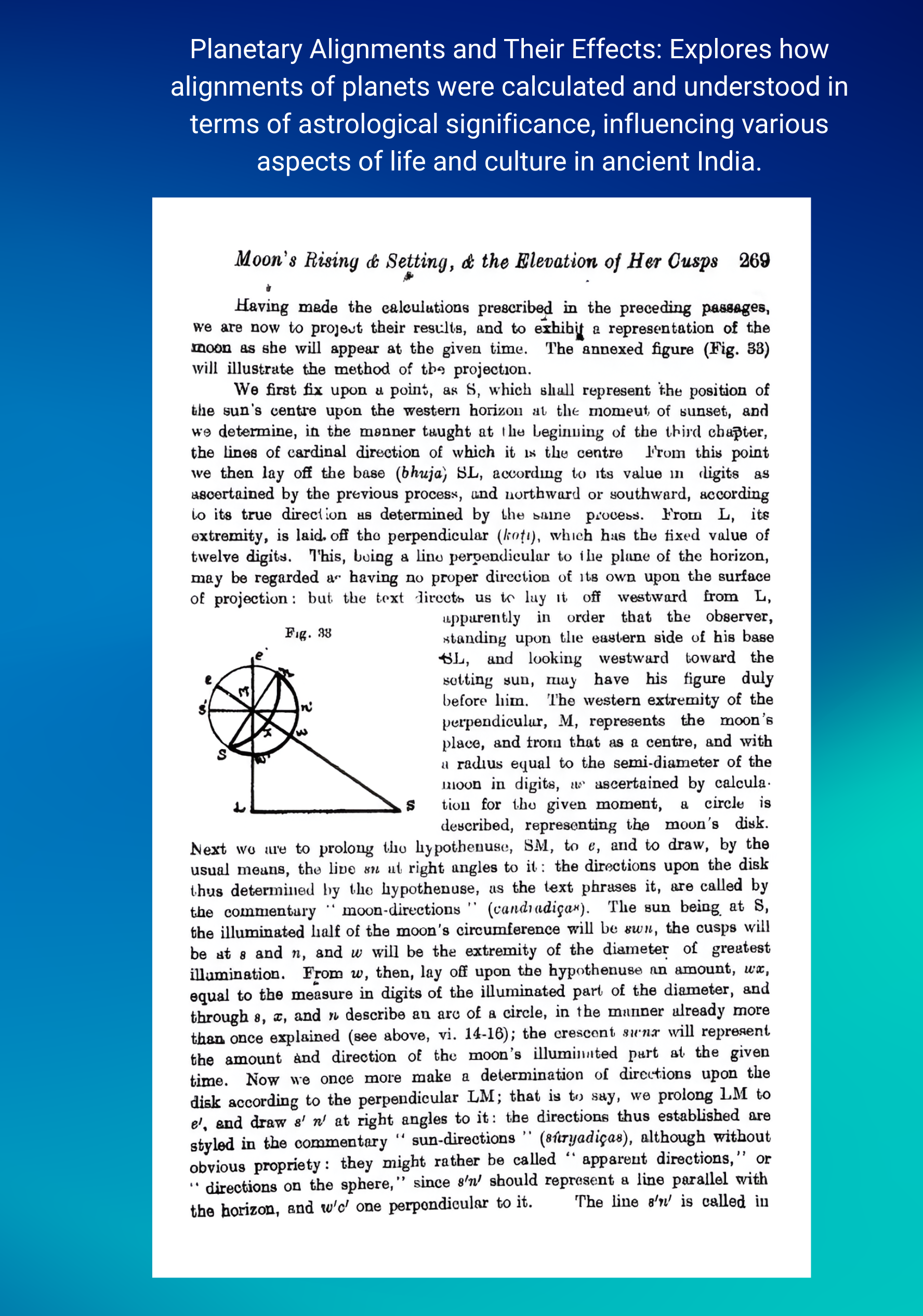
The precise calculations of celestial phenomena such as solstices, equinoxes, and planetary alignments were crucial for developing the Vedic calendar system. This calendar was essential not only for agriculture and trade but also for setting the dates of various festivals and religious ceremonies, which were believed to be most effective when aligned with specific celestial events.


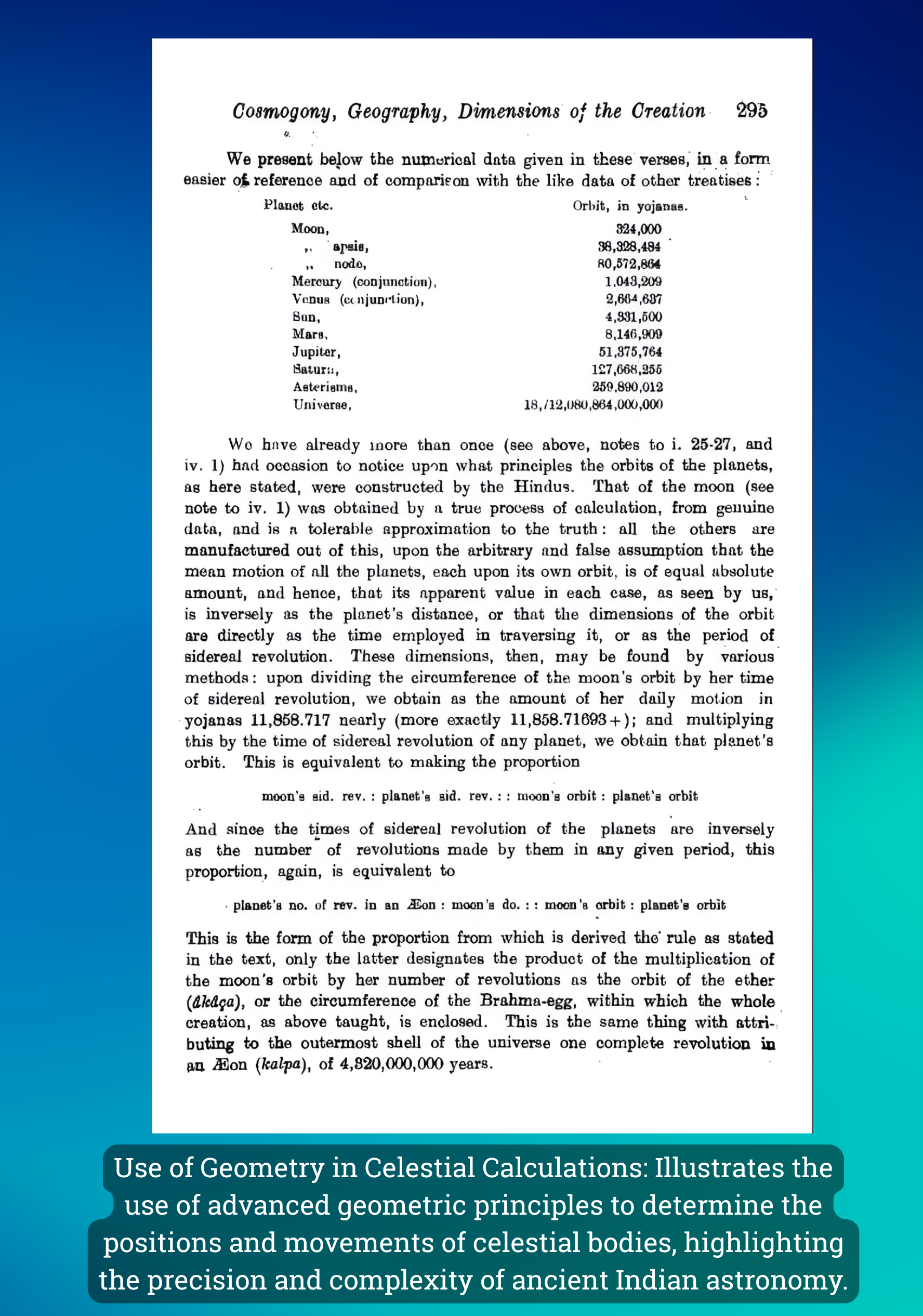


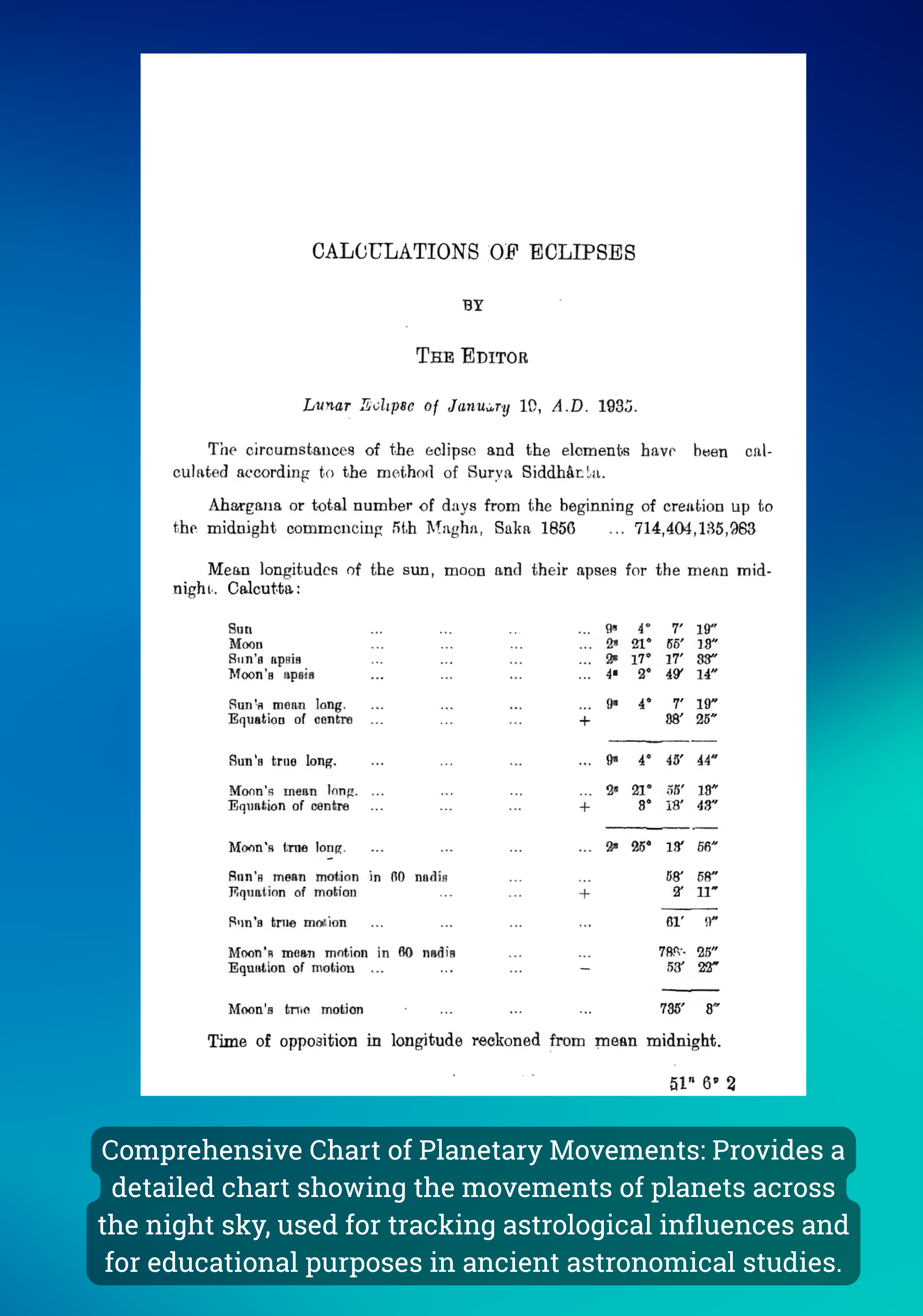

Conclusion
As we conclude our exploration of the “Surya Siddhanta”, it becomes evident that this text is much more than an astronomical guide—it is a cultural heritage that offers a window into the rich tapestry of Vedic life. The way ancient Indians used astronomical knowledge to structure their understanding of time and space is a testament to their sophisticated worldview, which continues to inspire and inform even in the modern era.
Throughout this series, we have traveled from the basic concepts of Vedic astronomy to its complex applications and deep cultural significance.
Call to Action
Share your thoughts on the knowledge contained in ancient Science of Vedic Astronomy.
Stay connected to read more about similar topics. The next blog will investigate how Yagna is a process of scientific activity rather than a ritual.
Update 19 March 2026
Vedic Astronomy is the Clockwork of the Indian Soul, where the precision of celestial observations has defined the timing of agriculture, festivals, and social life for over five millennia.
C — Add festival-context intro hook + internal link
After the first paragraph of the post body (after the opening statement). Insert as the second paragraph.
Today, on Chaitra Shukla Pratipada — Ugadi, the Hindu New Year — that clockwork is most publicly visible. The Panchanga Sravanam broadcast in temples across South India this morning is the same five-limb astronomical system this post documents: Tithi, Vara, Nakshatra, Yoga, Karana computed simultaneously to mark the precise moment Shaka 1948 begins. The festival is the science made audible and social. Read our Ugadi Panchanga Precision analysis for the specific astronomical calculations behind today’s date.
Feature Image: Click here to view the image.
Glossary of Terms:
1. Surya Siddhanta: An ancient Indian astronomical treatise that provides sophisticated calculations of celestial phenomena, serving as a core text in Indian astronomy.
2. Vedic Culture: Refers to the period of Indian history associated with the Vedas, the oldest scriptures of Hinduism, which embody religious practices, rituals, and social customs.
3. Celestial Phenomena: Events in the sky involving celestial bodies like the sun, moon, stars, and planets, including eclipses, comet appearances, and planetary alignments.
4. Solstices and Equinoxes:
-
Solstice: Occurs when the sun reaches its highest or lowest point in the sky at noon, marked by the longest and shortest days.
-
Equinox: Occurs twice a year when the sun is exactly above the equator, making day and night of equal length.
5. Planetary Alignments: Refers to the arrangement of planets in a line or a significant positional relationship to each other and the sun.
6. Vedic Calendar System: An ancient timekeeping system that uses astronomical observations to mark significant times for agricultural, religious, and social activities.
7. Auspicious Dates: Dates considered favorable for specific activities based on astrological or celestial criteria, often used in contexts like marriages or starting new ventures.
8. Architectural Projects: Large-scale building endeavors, often influenced by astronomical alignments for religious and cultural purposes in ancient Indian architecture.
9. Rituals and Ceremonies: Structured religious or social ceremonies that are performed in traditional manners, often aligned with astronomical events to maximize their spiritual effectiveness.
10. Celestial Mechanics: The branch of astronomy that deals with the motions and gravitational forces of celestial objects.
Link for Next Related Blog
Credit for Images: https://archive.org/details/surya-siddhanta-english-translation-ebenezer-burgess/page/76/mode/1up
#vedicastrology #jyotish #astronomy #sanskrit #vedicscience #science #Suryasiddhanta
Visit Related Previous Blogs:
- Creation of Universe as described in Nasadiya Sukta of Rigveda
- Bhagwan Varaha Pulling Out Landmass out of Ocean.
- Surya Siddhanta Astronomical Truth of Rahu’s Bite
- Astronomy in Surya Siddhanta
Link for Next Related Blog
- https://hinduinfopedia.com/hindu-wisdom-in-yagna-fire-real-not-myth/
- https://hinduinfopedia.com/hindu-wisdom-in-ritual-and-food/
- https://hinduinfopedia.com/hindu-wisdom-in-surgery-sushruta-blades-are-rea/
- https://hinduinfopedia.com/surgeon-sushrutas-pioneering-procedures/
- https://hinduinfopedia.com/surgeon-sushrutas-scalpel-unveiled/
- https://hinduinfopedia.com/metal-mastery-hindu-zinc-science-not-myth/
- https://hinduinfopedia.com/hygiene-in-hindu-texts/
- https://hinduinfopedia.com/vegetarian-diet-of-hindu-wisdom/
Good
Good
Awesome
[…] global scientific advancements to Greco-Roman or Babylonian cultures. Previous articles, such as Vedic Astronomy and Basic Concepts, Astronomy in Surya Siddhanta, and Solar Eclipse Insights from Hindu Texts, […]