

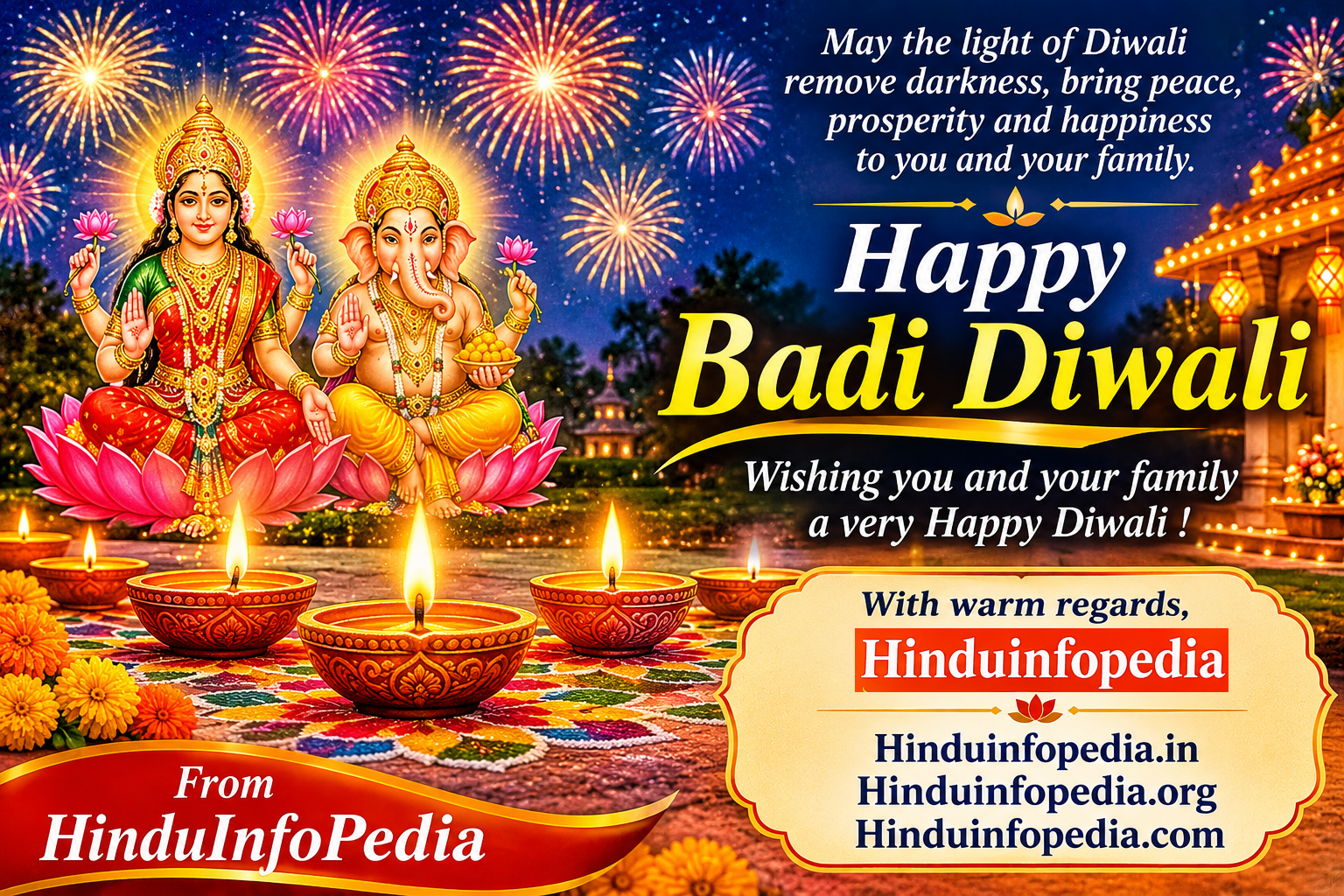
Deepavali of 2026: India’s Living Civilizational Heritage from Ayodhya to the Modern World
Published by HinduinfoPedia.in • Indian Heritage Series • November 2026
On 8 November 2026, across urban centers and quiet villages, millions of terracotta diyas will illuminate India. Yet Deepavali of 2026 is far more than an annual holiday on the calendar. It serves as a living, breathing transmission of Indian civilizational continuity—interweaving classical literature, regional agrarian cycles, commercial ethics, and the resilient institution of the family.
Ayodhya and Classical Historical Foundations
In Northern India, Deepavali of 2026 is intimately tied to the narrative of Maryada Purushottama Sri Rama returning to Ayodhya alongside Sita and Lakshmana after fourteen years in exile. The lighting of lamps represents the restoration of rightful governance and the vindication of Dharma.
Historiographically, the observance of autumnal lamp festivals is attested across classical Sanskrit literature. The 7th-century dramatist-emperor Harsha references Dīpapratipadotsava in the play Nāgānanda, where newly wedded couples were presented with auspicious lamps. Two centuries later, the polymath Rajasekhara’s 9th-century treatise Kāvyamīmāṁsā describes homes whitewashed and decorated with rows of night lamps across urban settlements at the end of the monsoons.
Diverse Regional Threads of One Shared Tradition
A distinctive hallmark of Indian civilization is unity without enforced uniformity. Across India’s linguistic regions, Deepavali expresses itself through distinct focal points:
- Southern India (Andhra Pradesh, Telangana, Karnataka, Tamil Nadu): The primary focus falls on Naraka Chaturdashi, commemorating the victory of Lord Krishna and Satyabhama over the tyrannical Narakasura. Celebrations begin before dawn with traditional herbal oil baths (abhyanga snana), followed by new clothing and family feasts.
- Western India (Gujarat & Rajasthan): Deepavali is closely intertwined with the commercial new year (Bestu Varas). The ritual of Chopda Pujan sanctifies new business ledgers, invoking Lakshmi and Ganesha for ethical enterprise.
- Eastern India (Bengal, Assam, Odisha): The occasion coincides with the intense midnight worship of Maa Kali, honoring the fierce maternal aspect of divinity vanquishing dark cosmic forces.
- Maharashtra: Families celebrate an extended sequence starting with Vasubaras (honoring cattle), followed by Dhanatrayodashi, Bhaubeej, and the crafting of historic miniature earthen forts (killas) by children in memory of Chhatrapati Shivaji Maharaj.
Sri Tirupati Balaji Pure Vegetarian Rajasthani Bhojanalaya
Serving travelers, families, and commercial transport on the Nellore-Chennai corridor. Savor wholesome Rajasthani thalis, fresh phulkas, and satvik vegetarian dishes prepared with cleanliness, care, and highway convenience.
View Menu & Highway Location →
Find us on Google Maps
Agrarian Rhythms and Mercantile Ethics
Historically, Deepavali marks the conclusion of the Kharif harvest. For agrarian communities, the presence of grain stocks in household storehouses represents the physical manifestation of Dhanya Lakshmi. Connected celebrations such as Govardhan Puja directly sanctify livestock, pasture lands, and agricultural tools, underscoring ecological gratitude.
In the mercantile sphere, the festival marks the transition of financial cycles. The traditional ledger ceremony of Chopda Pujan explicitly ties commercial prosperity to ethical accountability—mandating that wealth generation must operate in service of family welfare, charity, and civic duty.
A Living Civilizational Continuity
Deepavali is not a relic of antiquity preserved in museum galleries; it is a vital, functioning cultural institution. Despite contemporary shifts toward urbanization and digital communication, the generational core remains firm: children shaping earthen lamps, grandparents passing down oral narratives, and communities renewing their dedication to righteous conduct. In every lamp lit across the subcontinent, India’s living civilizational heritage burns bright.
Glossary of Terms
1. Maryada Purushottama: An honorific title of Lord Rama, meaning the supreme among those who uphold righteous conduct, moral discipline, duty, and exemplary human values.
2. Dharma: The Hindu principle of righteousness, moral duty, ethical conduct, and the natural order governing individual and social life.
3. Dīpapratipadotsava: A Sanskrit expression associated with an auspicious lamp festival, referenced in classical Sanskrit literature in connection with festive lamp-lighting traditions.
4. Nāgānanda: A Sanskrit play attributed to the seventh-century ruler and dramatist Harsha, containing references to cultural and ceremonial practices, including the presentation of auspicious lamps.
5. Kāvyamīmāṁsā: A ninth-century Sanskrit literary treatise by Rajasekhara that discusses literary traditions and provides descriptions of cultural practices and social life in historical India.
6. Naraka Chaturdashi: An important Deepavali observance commemorating Lord Krishna and Satyabhama’s victory over the demon Narakasura, symbolizing the triumph of righteousness over tyranny.
7. Abhyanga Snana: A traditional ceremonial oil bath performed before sunrise during Deepavali, particularly in Southern India, as a customary act of purification and celebration.
8. Bestu Varas: The Gujarati New Year celebrated around Deepavali, marking the beginning of a new commercial and financial year for businesses and households.
9. Chopda Pujan: A traditional Hindu ceremony involving the worship of business account books and financial ledgers, seeking blessings for prosperity, financial discipline, and ethical enterprise.
10. Vasubaras: A Maharashtrian Deepavali observance dedicated to the worship and honoring of cows and cattle, reflecting their traditional importance in agricultural and household life.
11. Dhanatrayodashi: Also known as Dhanteras, an important Deepavali observance associated with wealth, prosperity, health, and the worship of Goddess Lakshmi and Lord Dhanvantari.
12. Bhaubeej: A Maharashtrian observance celebrating the affectionate relationship between brothers and sisters, traditionally involving prayers, ceremonial rituals, and family gatherings.
13. Killas: Miniature earthen forts constructed by children in Maharashtra during Deepavali, commemorating the military heritage and fort-building traditions associated with Chhatrapati Shivaji Maharaj.
14. Kharif: The agricultural cropping season in India associated with the monsoon, when crops are sown during the rainy season and generally harvested in autumn.
15. Dhanya Lakshmi: A manifestation of Goddess Lakshmi associated with food grains, agricultural abundance, nourishment, and material prosperity.
16. Govardhan Puja: A Hindu observance associated with Lord Krishna and Govardhan Hill, expressing gratitude for livestock, agricultural resources, pasture lands, and the natural environment.
17. Mercantile Ethics: Moral principles governing commercial activities, emphasizing honesty, accountability, responsible wealth creation, charity, and obligations toward family and society.
18. Civilizational Continuity: The transmission and preservation of a civilization’s traditions, values, historical memory, cultural practices, and institutions across successive generations.
19. NH-16 (National Highway 16): A major Indian national highway connecting Kolkata and Chennai along India’s eastern coastal corridor, passing through Andhra Pradesh, including the Nellore–Nayudupeta region.
20. Agrarian Rhythms: The recurring seasonal patterns of agricultural activity, including sowing, cultivation, harvesting, livestock management, and associated community festivals.
#Deepavali #Diwali #IndianHistory #IndianCulture #IndianHeritage #HinduFestival #FestivalOfLights #Ayodhya #LordRama #Hinduism #India #CulturalHeritage #HinduinfoPedia