

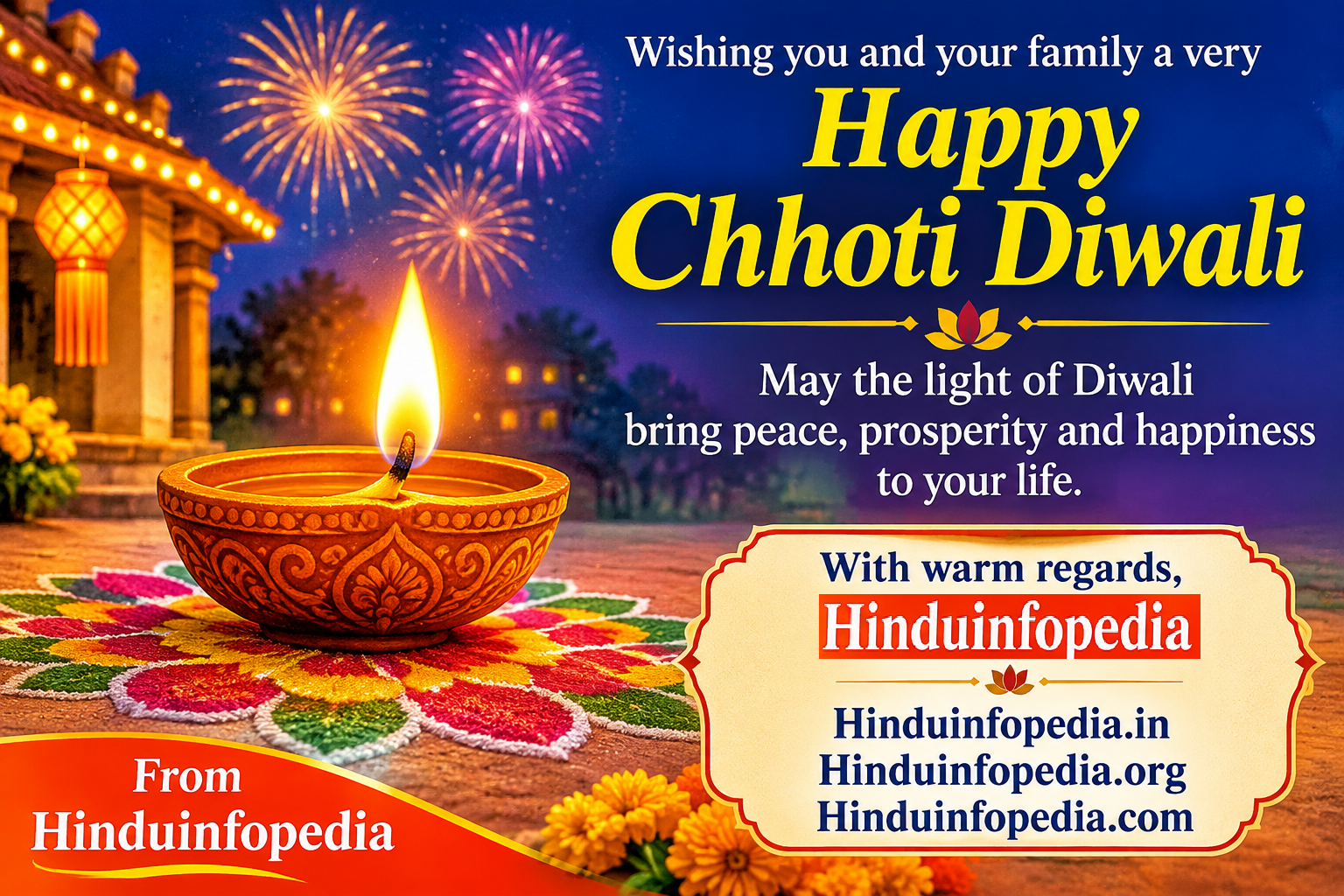
Diwali Chaos, Explained: Why India’s Festival of Lights Is Loud by Design
HinduinfoPedia.com • Culture Decoded for the World
Search “Diwali” and you will find serene images: a row of clay lamps, a rangoli at the doorstep, a family in silk at prayer. Arrive in an Indian city during Diwali week and you meet something else entirely. Markets stay jammed past midnight, traffic barely moves, and firecrackers rattle through the streets until well after dark. Visitors often ask whether the festival has lost its way. It has not. This Diwali Chaos is the festival working exactly as it always has—only now inside cities of twenty million people.
One name, many festivals
The first surprise for outsiders is that Diwali is not a single event. It is a five-day sequence: Dhanteras, when families buy metal and gold for luck; Naraka Chaturdashi, which in South India is the main celebration, begun with a pre-dawn oil bath; Lakshmi Puja on the new-moon night, which falls on 8 November this year; Govardhan Puja; and Bhai Dooj, honouring the bond between brothers and sisters. Bengal worships Kali on the same night. Jains mark Mahavira’s nirvana. Sikhs celebrate Bandi Chhor Divas. Several calendars, regions and faiths converge on one week, so the crowds converge too.
An economy that breathes out once a year
Diwali arrives after the monsoon harvest, when farm income reaches the market. Traders still perform Chopda Pujan, blessing fresh account books for the new financial year. Shopkeepers, potters, sweet-makers and tailors earn a large share of their annual income in these few weeks. The noise of the bazaar is that economy at work. Calling it disorder misses what it does: money moves from salaried households to small traders and artisans faster than in any other week of the year.
The festival happens in public
In much of the West, holidays are private: a closed door, a family meal. Indian festivals happen outdoors. Neighbours trade sweet boxes, lamps line balconies facing the street, and a lane becomes a shared living room for the night. There is a real cost. Air quality in northern cities often turns hazardous after Diwali night, and the debate over firecrackers is loud and genuine within India itself.
The quiet underneath
Look past the din and the ritual core survives intact. A mango-leaf toran is hung over the door. Oil is poured into clay diyas. A family sits for a few minutes of Lakshmi puja at the auspicious hour before the first rocket goes up. The prayer behind it all comes from the Upanishads: tamaso mā jyotir gamaya—lead me from darkness to light.
For the global reader, then, Diwali Chaos is not a corruption of the postcard. It is the full picture, and the postcard shows only a small part of it. If you visit, step into the crowd, carry patience and a mask, and accept every sweet you are offered.
Sri Tirupati Balaji Pure Vegetarian Bhojanalaya
Driving between Chennai and Tirupati or Nellore? Break your journey with a Rajasthani thali, South Indian tiffins, hot jalebi and masala chai, all 100% vegetarian, with family seating and ample parking right on the highway.
📍 NH-16 (Nellore–Chennai Highway), opposite Chandrababu Colony, near BP petrol pump, Nayudupeta, Andhra Pradesh
Glossary of Terms
1. Dhanteras: The first day of the Diwali festival, when families traditionally purchase gold, silver, utensils or other metal items as symbols of prosperity and good fortune.
2. Naraka Chaturdashi: The second day of the Diwali festival, particularly significant in South India, where people traditionally take an early-morning oil bath to mark the defeat of the demon Narakasura.
3. Lakshmi Puja: A religious ceremony dedicated to Goddess Lakshmi, performed on the new-moon night of Diwali to seek prosperity, abundance and well-being.
4. Chopda Pujan: A Gujarati business tradition in which traders worship their account books and financial records, marking the beginning of a new business year.
5. Govardhan Puja: A Hindu observance commemorating Lord Krishna’s protection of the people of Braj by lifting Govardhan Hill against torrential rain.
6. Bandi Chhor Divas: A Sikh celebration commemorating Guru Hargobind Sahib’s release from imprisonment at Gwalior Fort, along with fifty-two Hindu kings.
7. Toran: A decorative doorway hanging, traditionally made with mango leaves and flowers, symbolising auspiciousness, welcome and prosperity.
8. Tamaso Mā Jyotir Gamaya: A Sanskrit prayer from the Brihadaranyaka Upanishad meaning “Lead me from darkness to light,” expressing the spiritual movement from ignorance towards knowledge and enlightenment.
#Diwali #Deepavali #FestivalOfLights #HinduFestival #LakshmiPuja #IndianCulture #Hinduism #DiwaliCelebration #IndianTradition #HinduinfoPedia