

Raman Effect: Unveiling Vedic Science’s Light – Not Myth
Reclaiming Vedic Wisdom Through Modern Science
Raman, a Nobel laureate and India’s scientific pioneer, embodies the spirit of empirical inquiry rooted in Vedic traditions, far from the ‘mythical’ label born of colonial-era intellectual marginalization. Building on the legacy of Vedic Mathematics, his discovery of the Raman Effect bridged ancient cosmic curiosity with modern physics. Awarded the Nobel Prize in 1930, he became the first Asian to achieve this honor in science, proving India’s scientific heritage is a living tradition. This blog explores the shaping of C.V. Raman as a scientific icon, the Raman Effect, its Vedic resonance, and its global impact—continuing our journey to reclaim Hindu scientific wisdom.
Formative Years: Inheriting a Legacy of Vedic Insight

Born in 1888 in Tiruchirappalli, Tamil Nadu, Chandrasekhara Raman was raised in a traditional Brahmin household where Vedic culture permeated everyday life—not just in rituals but in the worldview passed through generations. His father, a lecturer in mathematics and physics, exemplified this integration of spiritual heritage and rational inquiry. Raman’s brilliance in mathematics by age 11 was no anomaly—it reflected a civilizational memory shaped by centuries of disciplined thought, as seen in the intellectual lineage of Aryabhata. By 16, he had earned a physics degree from Presidency College, Madras, driven by a curiosity for light and sound that echoed the elemental insights of Hindu cosmology. The Rigveda (10.88.13) speaks of Surya’s brilliance—tásya bhā́no janitā́ sū́ryasya—a cosmic symbolism of light as the origin of order, much like Raman’s quest. Similarly, in the Upanishadic vision of Nāda Brahman, sound is the vibration behind creation, a theme he unknowingly mirrored in his earliest acoustics work. It wasn’t textual citation but cultural DNA—rooted in Vedic truths—that shaped his scientific instinct.
The Science Behind Raman’s Light: Echoes of Ancient Thought
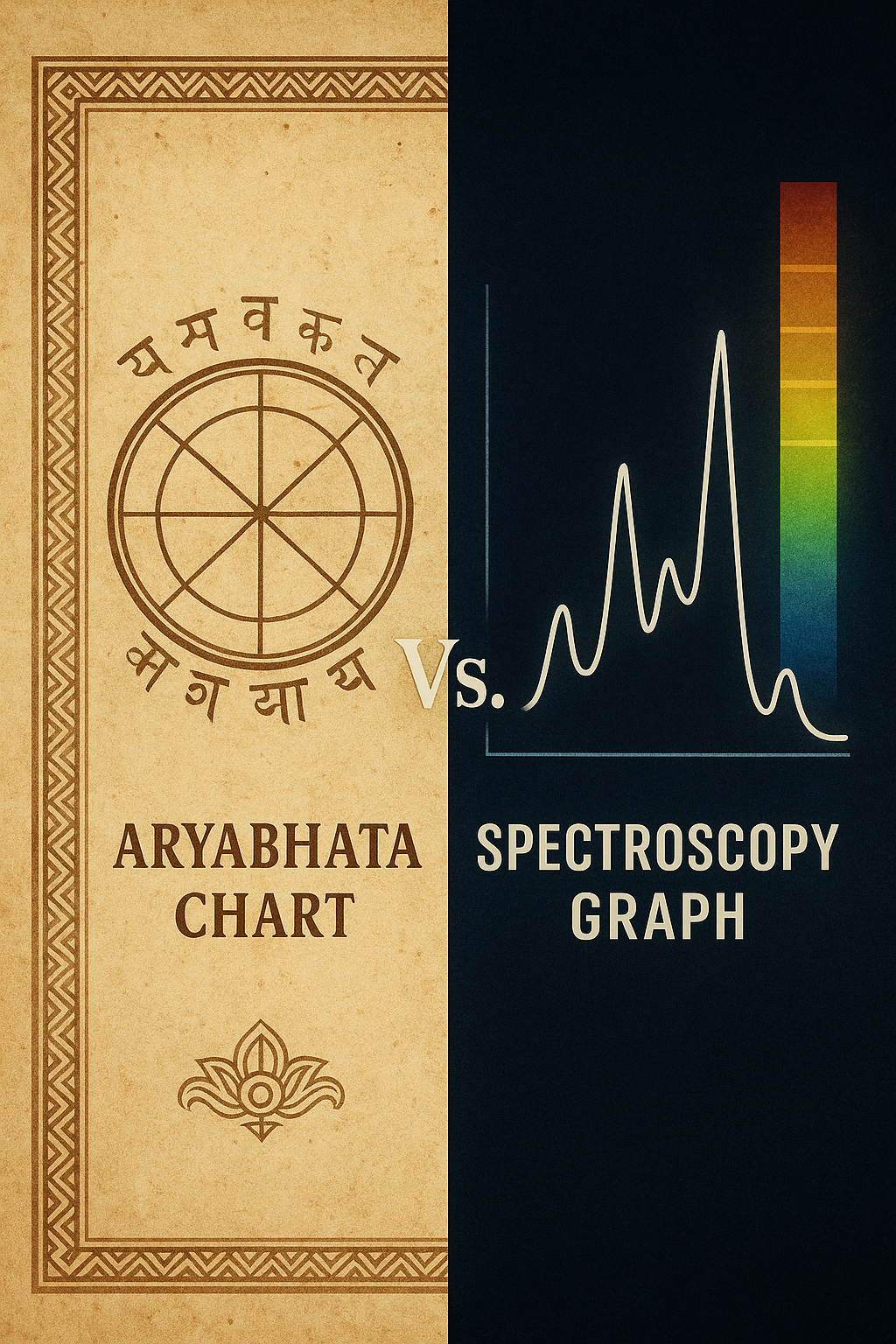
In 1928, at the Indian Association for the Cultivation of Science in Kolkata, Raman made a breakthrough now known globally as the Raman Effect: he observed that when sunlight passed through a transparent liquid, part of the scattered light shifted in wavelength. This shift revealed molecular vibrations—unlocking a new method for understanding matter through light. Far from being abstract or alien, this science, this discovery resonated with Vedic insights into light as a fundamental carrier of cosmic information. Raman’s focus on direct observation and reproducible results mirrored the empirical spirit of Sushruta’s surgical practices, both grounded in demonstrable reality. A simplified diagram of this phenomenon is often used in modern physics to teach inelastic scattering—an echo of a much older wisdom. His 1930 Nobel Prize shattered colonial claims that Indians lacked scientific originality.
Scientific Nation-Building: Raman’s Legacy in Bharat
The Raman Effect transformed science across disciplines—from chemistry and materials science to astrophysics. Today, Raman spectroscopy is a vital tool to detect counterfeit medicines, analyze planetary atmospheres, and even diagnose cancers—echoing the Vedic notion of interconnected systems. But its impact wasn’t merely technical. Raman’s achievement became a catalyst for post-colonial scientific assertion. The founding of the Raman Research Institute in Bengaluru in 1948 marked not just the institutionalization of his work but also India’s renewed commitment to scientific self-reliance. His contributions laid the groundwork for advances in atomic research and optical sciences, influencing programs in ISRO and DRDO. As Bhaskara I’s methods ripple into satellite technologies, Raman’s legacy fuels modern Bharat’s scientific journey—with roots still firmly embedded in Sanatana soil.
From Bharat to the Cosmos: Raman’s Global Scientific Footprint
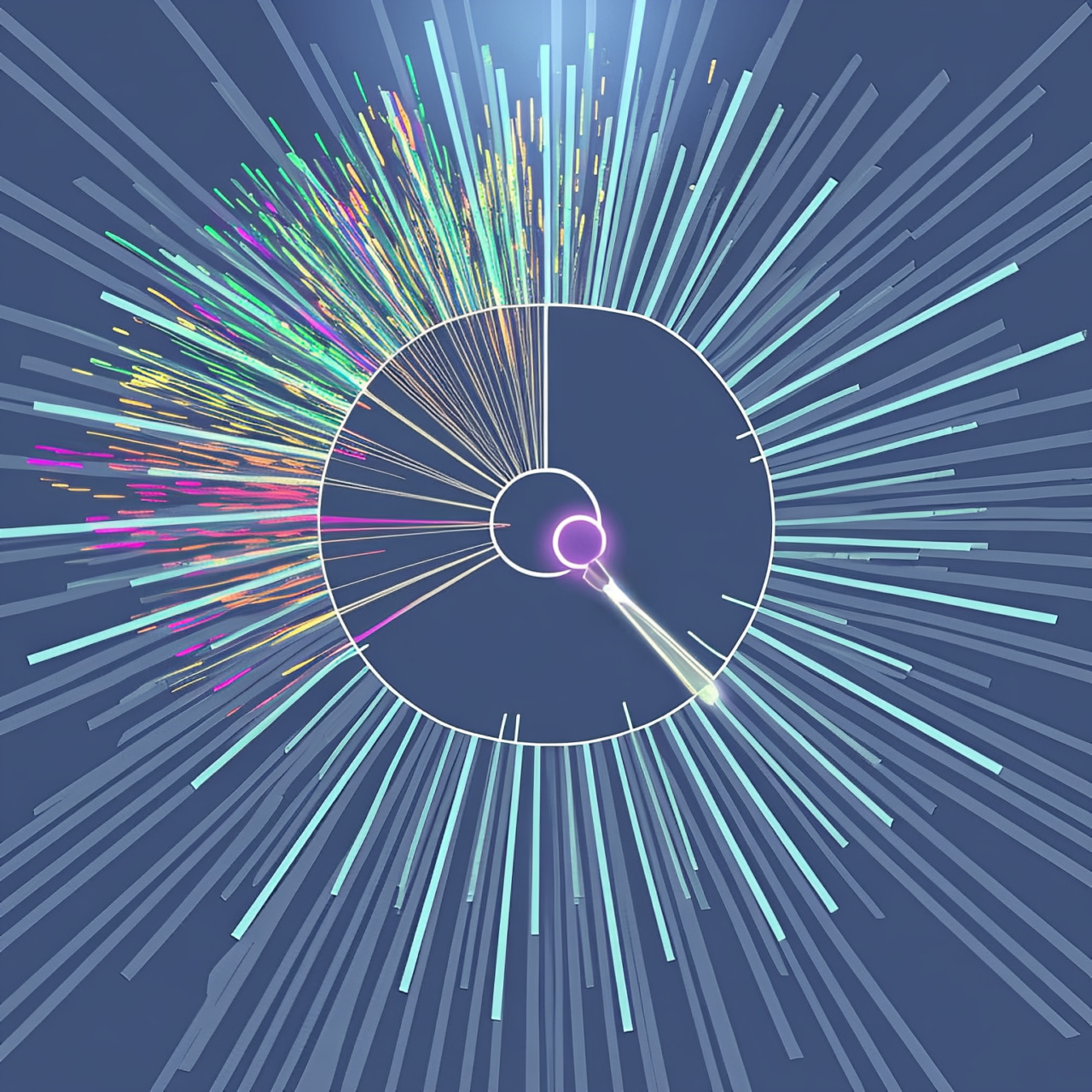
The Raman Effect transformed science, from chemistry to astrophysics. Today, Raman spectroscopy detects counterfeit drugs, analyzes planetary atmospheres, and diagnoses diseases—its reach mirroring Vedic interconnectedness. After his landmark work in Kolkata, Raman’s legacy lived on through the founding of the Raman Research Institute in Bengaluru in 1948, where light and matter are still explored. His influence spread globally, like Bhaskara I’s methods, with applications in modern space research.
A Scientific Yagna: Harmonizing Past and Future
Raman’s life was a modern yagna—a disciplined knowledge pursuit akin to Vedic rituals. He wore a white dhoti and turban at his Nobel acceptance—not out of nostalgia, but as a visible assertion that Indian identity and scientific excellence were never at odds. In doing so, Raman projected Sanatana dignity onto a global platform, reclaiming civilizational pride in a post-colonial world. His defiance of imposed Western scientific hierarchies mirrors Vedic Mathematics’ resilience, showing Hindu wisdom’s adaptability. This inspired India’s scientific community, paving the way for missions like Chandrayaan, aligning with Vedic astronomy.
Raman’s Light Still Shines on Vedic Truths
The Raman Effect, discovered by Indian physicist Raman, illuminates the empirical depth of Hindu scientific traditions—demonstrating that what was dismissed as myth is, in truth, enduring Vedic knowledge. Raman was not an exception but a product of a civilizational legacy that prized observation, harmony with nature, and intellectual rigor. From his Nobel-winning discovery to its global scientific applications, Raman carried forward the Vedic quest for truth—joining the lineage of Aryabhata, Bhaskara, and Shankaracharya. As we turn to more modern Indian scientists in our future blogs, the Raman Effect remains a beacon of real, rooted knowledge—not myth—proving that India’s wisdom shines brightest when nourished by its ancient soil.
Call to Action
How does the Raman Effect reshape your view of India’s scientific heritage? Share your thoughts in the comments and join us in uncovering more Vedic truths. Let’s honor this legacy—because it’s science, not superstition, that defines our past.
Feature Image: Click here to view the image.
Glossary of Terms
- Raman Effect: A phenomenon in physics discovered by C.V. Raman in 1928, where light changes its frequency when it passes through a transparent material, revealing molecular structure.
- Sanatana Dharma: Literally meaning “eternal duty” or “eternal order,” it is the original Sanskrit term for what is now referred to as Hinduism, representing a comprehensive spiritual and philosophical worldview.
- Nāda: A Sanskrit term meaning “primordial sound” or “cosmic vibration,” central to many Vedic and yogic concepts linking sound to the creation and perception of reality.
- Jyoti: Meaning “light” in Sanskrit; symbolically and literally used in Vedic texts to denote divine illumination, knowledge, and consciousness.
- Rigveda: The oldest of the four Vedas, composed in Vedic Sanskrit, it is a foundational text of Hindu philosophy and cosmology containing hymns, chants, and discussions on nature and existence.
- Tásya bhā́no janitā́ sū́ryasya: A phrase from Rigveda 10.88.13, often translated as “the brilliance of that which gave birth to the Sun,” reflecting a poetic and scientific reverence for cosmic light.
- Brahmin Household: A family belonging to the priestly and scholarly caste in Hindu society, traditionally associated with learning, teaching, and preserving sacred knowledge.
- Sushruta: An ancient Indian physician known as the “Father of Surgery,” credited with authoring the Sushruta Samhita, a foundational surgical and medical text.
- Aryabhata: A 5th-century Indian mathematician and astronomer known for his work on planetary motion, algebra, and trigonometry—well ahead of his time.
- Pramana: A key concept in Indian philosophy meaning “means of knowledge” or “valid cognition,” emphasizing evidence-based understanding.
- ISRO: Indian Space Research Organisation, India’s national space agency, widely respected for cost-effective and innovative space missions.
- DRDO: Defence Research and Development Organisation, India’s premier agency for military research and innovation.
- Spectroscopy: A scientific method used to study the interaction between matter and electromagnetic radiation, with applications in chemistry, physics, astronomy, and biology.
- Dhotī: A traditional Indian garment worn by men, especially in religious or ceremonial contexts. C.V. Raman famously wore one to accept his Nobel Prize.
#RamanEffect #VedicScience #AncientWisdom #SanatanaDharma #HinduinfoPedia
References and Additional Reading
- Raman’s Nobel Lecture (1930):
https://www.nobelprize.org/prizes/physics/1930/raman/lecture/
✅ Validates Raman’s direct words on light, vibration, and his scientific method. - Original Paper (1928) – “A New Radiation”: https://www.jstor.org/stable/24101519
- Rigveda 10.88.13 – Sanskrit + English version
https://www.sacred-texts.com/hin/rigveda/rv10188.htm
✅ Supports your citation of light and Surya from Vedic cosmology. - Nāda Brahman in Vedic philosophy
https://www.indiadivine.org/content/topic/978138-nada-brahman-the-unstruck-sound-of-the-universe/ - Raman Research Institute official site http://www.rri.res.in
- ISRO’s Spectroscopy Applications https://www.isro.gov.in
Previous Blogs on of the Series
- https://hinduinfopedia.com/cosmic-seed-of-universe/
- https://hinduinfopedia.com/bhagwan-varaha-and-his-tusks/
- https://hinduinfopedia.com/surya-siddhanta-astronomical-truth-of-rahus-bite/
- https://hinduinfopedia.com/vedic-astronomy-and-basic-concepts/
- https://hinduinfopedia.com/solar-eclipse-insights-from-hindu-texts/
- https://hinduinfopedia.com/astronomy-in-surya-siddhanta/
- https://hinduinfopedia.com/science-of-vedic-astronomy/
- https://hinduinfopedia.com/hindu-wisdom-in-yagna-fire-real-not-myth/
- https://hinduinfopedia.com/hindu-wisdom-in-ritual-and-food/
- https://hinduinfopedia.com/hindu-wisdom-in-surgery-sushruta-blades-are-rea/
- https://hinduinfopedia.com/surgeon-sushrutas-pioneering-procedures/
- https://hinduinfopedia.com/surgeon-sushrutas-scalpel-unveiled/
- https://hinduinfopedia.com/metal-mastery-hindu-zinc-science-not-myth/
- https://hinduinfopedia.com/hygiene-in-hindu-texts/
- https://hinduinfopedia.com/vegetarian-diet-of-hindu-wisdom/
- https://hinduinfopedia.com/vegan-food-and-hindu-wisdom/
- https://hinduinfopedia.com/varna-system-hindu-merit-not-myth/
- https://hinduinfopedia.com/gurukul-truths-of-hindu-wisdom/
- https://hinduinfopedia.com/science-hub-rituals-vedic-truths-unveiled/
- https://hinduinfopedia.com/genetic-testing-in-ancient-gotra-system/
- https://hinduinfopedia.com/peace-in-sanatana/
- https://hinduinfopedia.com/aryabhata-and-mathematical-astronomy-not-myth/
- https://hinduinfopedia.com/bhaskara-i-refining-vedic-mathematics-not-myth/
- https://hinduinfopedia.com/bhaskara-ii-algebra-to-gravity-not-myth/
- https://hinduinfopedia.com/shankaracharyas-vedic-mathematics-practical-applications/
Link for Next Related Blog
- https://hinduinfopedia.com/raman-effect-unveiling-vedic-sciences-light/
- https://hinduinfopedia.com/hindu-calendar-traditions-timekeeping-in-ramayana-mahabharata/
[…] Originally published at: https://hinduinfopedia.com/raman-effect-unveiling-vedic-sciences-light/ […]
[…] lived epic narratives. As part of our series, building on the scientific validation in the “Raman Effect” blog and the recent “Hindu Calendar: Scientific Timekeeping, Not a Myth,” we […]
[…] https://hinduinfopedia.com/raman-effect-unveiling-vedic-sciences-light/ […]