

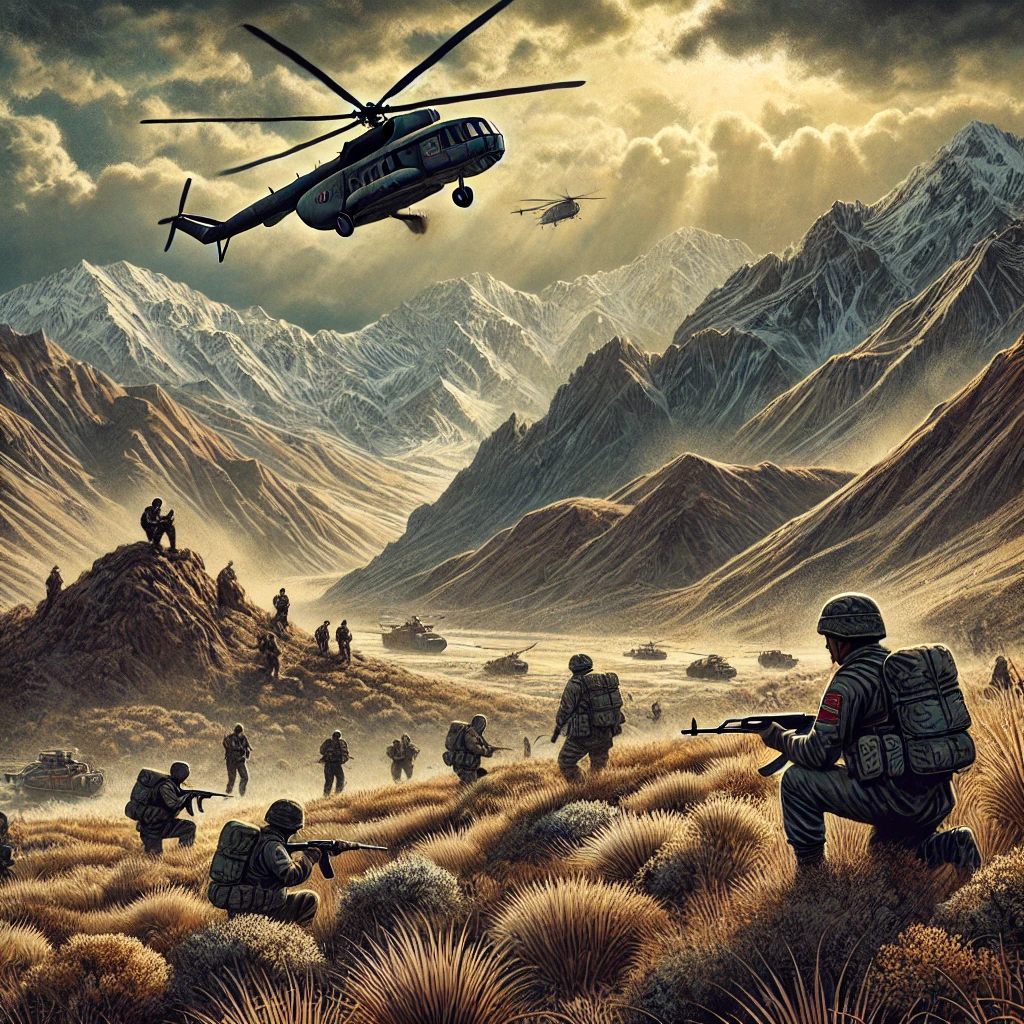
Afghanistan-Soviet War: How the 1979 Conflict Disrupted Global Peace and Security
Understanding the Larger Context of the Afghanistan-Soviet War
On December 24, 1979, the Afghanistan-Soviet War began, marking a pivotal chapter in Cold War history that would fundamentally reshape global dynamics. The Afghanistan-Soviet War demonstrated how far nations would go to assert their geopolitical dominance, ultimately disrupting world peace for decades. As we delve into the complex causes and profound consequences of the Afghanistan-Soviet War, we uncover its far-reaching effects on international security and the rise of Islamic extremism that continues affecting global politics today.
The Catalysts of Conflict: What Triggered the Afghanistan-Soviet War
Having established the Afghanistan-Soviet War’s significance in Cold War history, let’s examine the immediate catalysts that prompted Soviet military intervention in this consequential conflict.
The Soviet Union’s military intervention initiating the Afghanistan-Soviet War was not a sudden decision but the result of several strategic calculations and geopolitical concerns. The immediate trigger for the Afghanistan-Soviet War was instability within Afghanistan itself, where the communist government, after seizing power in a 1978 coup, struggled to maintain control amidst internal dissent and rebellion. The Kremlin leadership saw significant risk in allowing a pro-Soviet regime to collapse during what would become the Afghanistan-Soviet War, which would not only reflect poorly on Soviet ability to support allies but also potentially open doors for Western influence in a strategically crucial region.
Furthermore, Soviet leadership feared the spread of Islamic insurgency into the predominantly Muslim Central Asian republics of the USSR, making the Afghanistan-Soviet War a defensive measure in their strategic thinking. This threat of ideological and religious spillover, which could potentially ignite separatist movements within Soviet borders, compelled the USSR to secure its southern flank by stabilizing Afghanistan under a friendly regime through what became the Afghanistan-Soviet War. However, the intervention was catastrophically misjudged. Far from being a quick operation to stabilize a neighbor, the Afghanistan-Soviet War plunged the Soviet Union into a quagmire that would drain its resources and contribute significantly to its eventual collapse.
World Politics and the Cold War Theater During the Afghanistan-Soviet War
With Soviet motives for the Afghanistan-Soviet War clarified, we now turn to how their actions influenced the global stage, particularly the United States’ strategic responses during this defining Cold War conflict.
The Soviet invasion launching the Afghanistan-Soviet War was a landmark event in Cold War dynamics, perceived in the West as a dramatic escalation that could not go unchecked. The United States, already wary of Soviet expansionism, viewed the Soviet presence during the Afghanistan-Soviet War as a direct threat to the global balance of power and an attempt to extend Soviet influence into South Asia and potentially threaten access to Middle Eastern oil resources.
The U.S. response to the Afghanistan-Soviet War was multifaceted and marked a significant shift in Cold War dynamics. Through Operation Cyclone, one of the longest and most expensive covert CIA operations, the U.S. supplied billions of dollars in arms and aid to the Mujahideen fighting in the Afghanistan-Soviet War. This program was part of a broader strategy to counter Soviet influence globally, but in the Afghanistan-Soviet War context, it had a unique ideological component. By supporting predominantly Islamist groups during the Afghanistan-Soviet War, the U.S. aimed to counter what it perceived as an ideological battle against Soviet communism. This support helped to globalize the Afghanistan-Soviet War conflict, drawing fighters from across the Muslim world into Afghanistan, facilitated by significant funding from allies like Saudi Arabia and Pakistan.
This phase of the Cold War exemplified through the Afghanistan-Soviet War highlighted a critical aspect of superpower rivalry, where direct confrontations were often eschewed in favor of proxy wars. In the Afghanistan-Soviet War, this meant a devastating conflict that was fueled by external powers, each pursuing their broader strategic interests under the guise of supporting local forces. The consequences of the Afghanistan-Soviet War as a proxy conflict would extend far beyond Afghanistan’s borders, influencing global politics and contributing to the rise of a new wave of extremism and global terrorism.
By delving deeper into these aspects of the Afghanistan-Soviet War, we can offer a more nuanced view of how this conflict was not only significant in its own right but also a pivotal moment in the broader tapestry of the Cold War and its lasting impact on international relations.
The Rise of Islamic Extremism Through the Afghanistan-Soviet War
As we explore the Afghanistan-Soviet War’s role as Cold War proxy battleground, it becomes crucial to understand the consequential rise of Islamic extremism that stemmed from this geopolitical conflict.
The Afghanistan-Soviet War, a defining event in the late 20th century, served as a significant catalyst for the rise of Islamic extremism globally. The Afghanistan-Soviet War, fueled by Cold War dynamics and external interventions, not only transformed Afghanistan into a battleground but also into a training ground for Islamist fighters from around the world. The involvement of global powers during the Afghanistan-Soviet War, particularly the United States, Saudi Arabia, and Pakistan, in supporting the Mujahideen against Soviet forces contributed to the spread of a more militant form of Islam, which was strategically deployed as a tool to mobilize fighters under the banner of jihad during the Afghanistan-Soviet War.
Promotion and Infrastructure for Extremist Ideology During the Afghanistan-Soviet War
The seeds of extremism planted during the Afghanistan-Soviet War soon sprouted an infrastructure that would globalize and intensify militant Islamist ideologies far beyond the conflict’s geographic boundaries.
During the Afghanistan-Soviet War, a complex infrastructure for funding, training, and arming Islamist militants was established, primarily by the CIA and Pakistani intelligence (ISI), with significant financial contributions from Saudi Arabia. This network facilitating the Afghanistan-Soviet War efforts enabled the global movement of militants to Afghanistan, where they were indoctrinated with an extremist form of Islam. Notably, figures like Osama bin Laden, who would later found al-Qaeda, rose to prominence during the Afghanistan-Soviet War period. The camps and schools established in Pakistan and Afghanistan during the Afghanistan-Soviet War did not merely serve as military training sites but also as centers for ideological indoctrination, spreading a radical version of Islamism to fighters who would return to their home countries with these militant ideals cultivated during the Afghanistan-Soviet War.
Impact on Pakistan and India Resulting from the Afghanistan-Soviet War
Beyond the battlefields of the Afghanistan-Soviet War, the repercussions of supporting extremist groups had profound effects on neighboring countries, particularly Pakistan and India.
In Pakistan, the consequences of fostering extremist ideologies during the Afghanistan-Soviet War were profound and long-lasting. The Pakistani government and military found these militant groups useful proxies in their geopolitical pursuits, particularly in their longstanding conflict with India, leveraging infrastructure developed during the Afghanistan-Soviet War. The support from the United States during the Afghanistan-Soviet War included military aid and advanced weaponry, which Pakistan diverted in part to bolster its capabilities against India. This period of the Afghanistan-Soviet War marked the beginning of a long-standing pattern where Pakistan would harbor and support various militant groups as part of its strategic depth policy in the region.
Geopolitical Domino Effects of the Afghanistan-Soviet War
The regional consequences of the Afghanistan-Soviet War extended far beyond its immediate participants, reshaping politics and security dynamics across the globe for decades.
The legacy of the Afghanistan-Soviet War has been far-reaching and has profoundly shaped global politics and regional conflicts for decades following the conflict’s conclusion. After Soviet troops withdrew in 1989, ending the Afghanistan-Soviet War militarily but not its consequences, a power vacuum emerged, plunging Afghanistan into a brutal civil war. This instability following the Afghanistan-Soviet War not only led to the rise of the Taliban but also set the stage for the emergence of al-Qaeda, which orchestrated the September 11 attacks, prompting the U.S. invasion of Afghanistan in 2001—a direct consequence of the Afghanistan-Soviet War’s aftermath.
Escalation of Global Islamist Movements Following the Afghanistan-Soviet War
The perceived victory of the Mujahideen over a superpower during the Afghanistan-Soviet War emboldened Islamist movements worldwide, leading to escalated conflicts in regions like Chechnya and the Balkans. The narrative of a successful jihad during the Afghanistan-Soviet War became a potent recruitment tool for Islamist groups, fostering a global jihadist sentiment that contributed to an increase in terrorism and insurgent activities around the world—a direct legacy of the Afghanistan-Soviet War.
U.S. Military Interventions Influenced by the Afghanistan-Soviet War Legacy
The aftermath of the Afghanistan-Soviet War and the rise of global terrorism provided the United States with justification for military interventions in the Middle East, most notably in Iraq and Libya. These interventions were rationalized through narratives of combating terrorism and preventing the proliferation of weapons of mass destruction—threats that emerged partly from the Afghanistan-Soviet War’s consequences—although they often led to further regional destabilization and the emergence of new terrorist groups. This further encouraged Islamic fundamentalist forces to unite against Western powers, creating dynamics traceable to the Afghanistan-Soviet War.
Consequences of the Afghanistan Withdrawal Post-Afghanistan-Soviet War Legacy
The reassertion of Taliban control following the U.S. departure marked a significant phase in Afghanistan’s long-standing conflict rooted in the Afghanistan-Soviet War era, leading to widespread concern over the potential re-Islamization of the state. This shift has had significant ripple effects, impacting regional stability and altering power dynamics within and beyond Afghanistan’s borders—continuing patterns established during the Afghanistan-Soviet War.
Utilization of Abandoned Military Assets
A critical aspect of the withdrawal was the vast array of high-tech military equipment left behind, which has since been appropriated by the Taliban—an organization whose origins trace directly to the Afghanistan-Soviet War’s aftermath. This cache of advanced weaponry not only enhances Taliban military capability but also emboldens them to propagate their extremist ideologies more assertively, continuing ideological threads from the Afghanistan-Soviet War era. The presence of such equipment has complicated the security landscape in the region, particularly affecting neighboring countries still dealing with Afghanistan-Soviet War legacies.
Impact on Pakistan Continuing from the Afghanistan-Soviet War Era
The Tehreek-e-Taliban Pakistan (TTP), utilizing networks and ideologies developed during and after the Afghanistan-Soviet War, has intensified its operations due to the turmoil in Afghanistan, exploiting the power vacuum and increased access to sophisticated weaponry. The TTP’s resurgence is marked by heightened cross-border attacks and criminal activities, such as extortion and narcotics trafficking, to fund their operations—methods refined during the Afghanistan-Soviet War period. Despite Pakistan’s efforts to urge the Afghan Interim Government to address these sanctuaries, there has been little effective response. The situation underscores the need for regional cooperation and effective border security measures to manage the security challenges in South Asia stemming from the Afghanistan-Soviet War’s long legacy.
This development poses a stark illustration of how the consequences of the Afghanistan-Soviet War and subsequent international military engagements can extend far beyond the immediate theater of conflict, influencing insurgent strategies and regional security dynamics. The scenario underscores the critical need for comprehensive exit strategies that consider the long-term impacts on both the country and its neighbors, ensuring that military withdrawals do not inadvertently lay the groundwork for future conflicts or empower the very forces they sought to subdue—lessons from the Afghanistan-Soviet War that remain unlearned.
Impact on the Israel-Palestine Conflict Traceable to the Afghanistan-Soviet War
The resurgence of militant Islamist ideology, with ideological roots in the Afghanistan-Soviet War’s jihadist networks, has also impacted the ongoing Israel-Palestine conflict, particularly during the 2023-24 escalations. Iran, Hezbollah, and Yemen have increasingly positioned themselves against Israel, with Yemen even attempting to block international waterways, showcasing a regional realignment and the influence of jihadist narratives that have roots in the historical context of the Afghanistan-Soviet War.
Global Security Concerns Stemming from the Afghanistan-Soviet War
This global perspective on conflicts influenced by the Afghanistan-Soviet War leads us to a broader examination of the security concerns that continue to affect the international community today.
The Soviet invasion of Afghanistan in 1979 launching the Afghanistan-Soviet War and the subsequent U.S.-backed promotion of Islamic fundamentalism had far-reaching consequences, setting in motion a chain of events that would forever alter the global landscape. The devastating 9/11 attacks on the World Trade Center in New York marked a turning point directly traceable to networks and ideologies developed during the Afghanistan-Soviet War, as assaults on Western powers and non-Muslim nations escalated dramatically.
The Afghanistan-Soviet War created intricate webs of causes and effects that have shaped our contemporary world, from the rise of global terrorism to the shifting dynamics of international relations. The conflict demonstrated how superpower competition, when channeled through proxy wars like the Afghanistan-Soviet War, can have unintended consequences that reverberate for decades, fundamentally altering the global security landscape.
Reflections on the Afghanistan-Soviet War’s Larger Context
The Afghanistan-Soviet War was more than a mere military conflict; it was a crucial lesson in the unintended consequences of geopolitical maneuvers during the Cold War era. The Afghanistan-Soviet War not only shaped the latter stages of the Cold War but also laid the groundwork for numerous global conflicts we witness today, from the War on Terror to regional instabilities across the Middle East and South Asia. As we reflect on the Afghanistan-Soviet War as this pivotal moment in history, it is imperative to grasp these dynamics to better understand and navigate current global relations and security challenges. The Afghanistan-Soviet War serves as a stark reminder that short-term strategic gains can produce long-term security catastrophes, and that supporting extremist ideologies as geopolitical tools—as occurred during the Afghanistan-Soviet War—inevitably creates threats that transcend borders and generations.
The Afghanistan-Soviet War’s legacy continues shaping contemporary conflicts, from the ongoing instability in Afghanistan to the global jihadist movement, from Pakistan’s security challenges to the broader Middle Eastern tensions. Understanding the Afghanistan-Soviet War and its cascading consequences remains essential for policymakers, security analysts, and citizens seeking to comprehend the complex geopolitical landscape of the 21st century—a landscape fundamentally shaped by decisions made during the Afghanistan-Soviet War era.
Feature Image: Click here to view the image.
#AfghanistanSovietWar #ColdWar #IslamicExtremism #GlobalPolitics #ProxyWars
Related blogs
- World War 2 and Babi Yar: A Tragic Tale of Holocaust History
- World War 2: Reflecting on V-J Day and Use of Atomic Power
- World War 1 and Battle of Tannenberg
- Indo Pak War and Operation Grand Slam
- World War 2 in Bharat: The Battle Against Japanese Forces
- World War I Impact: The War for Supremacy
- World War II Exposes The Dark Realities of Power
- World War I and Devastation of Bharat II
- World War I and Devastation of Bharat I
Follow us:
- English YouTube: https://www.youtube.com/@Hinduofficialstation
- Hindi YouTube: https://www.youtube.com/@HinduinfopediaIn
- X: https://x.com/HinduInfopedia
- Instagram: https://www.instagram.com/hinduinfopedia/
- Facebook: https://www.facebook.com/Hinduinfopediaofficial
- Threads: https://www.threads.com/@hinduinfopedia
Related Blogs
- https://hinduinfopedia.com/iranian-revolution-how-1979-reshaped-global-oil-politics/
- https://hinduinfopedia.com/lebanon-civil-war-from-paris-of-the-middle-east-to-hezbollah-state/