

Gaza War And Trump Proposal That Year 57 Muslim Nations Knew
The concluding chapter: The Walls of Truth: What 57 Muslim Nations Know
भारत/GB
Analyze What Gaza War And Trump Proposal Exposed
When President Trump proposed displacing Gaza’s 2 million Palestinians to Egypt and Jordan in February 2025, he discovered what Egypt learned in 1948, what Jordan learned through Black September in 1970, what Lebanon learned through 15 years of civil war, and what Kuwait learned when it expelled 400,000 Palestinians in 1991. The Gaza War And Trump Proposal exposed a truth the international community spent 75 years denying: when it comes to Palestinian refugees, Muslim nations don’t just say no—they build walls, wage wars, and expel populations to enforce that no.
February 2025: When American Ignorance Met Arab Experience
On February 4, 2025, President Trump announced plans to “clean out” Gaza, relocate Palestinians to neighboring Arab states, and potentially transform the territory into what he called a “Riviera of the Middle East.” The proposal suggested Egypt could accept refugees in northern Sinai while Jordan could absorb populations in the southern kingdom, with the U.S. offering economic incentives to sweeten the deal.
The response was immediate and unanimous: Egypt, Jordan, Saudi Arabia, and every other Arab state rejected the 2025 Trump proposals outright. Not with diplomatic hedging or conditional acceptance—with flat, absolute refusal. King Abdullah II of Jordan announced immediately after October 7, 2023 that Jordan and Egypt would not accept refugees from Gaza. Egyptian President Abdel Fattah el-Sisi warned that accepting refugees would bring Hamas and militant groups into Sinai, meaning future wars would be fought on Egyptian soil.
What Trump Discovered: The Wall That Predates His Presidency
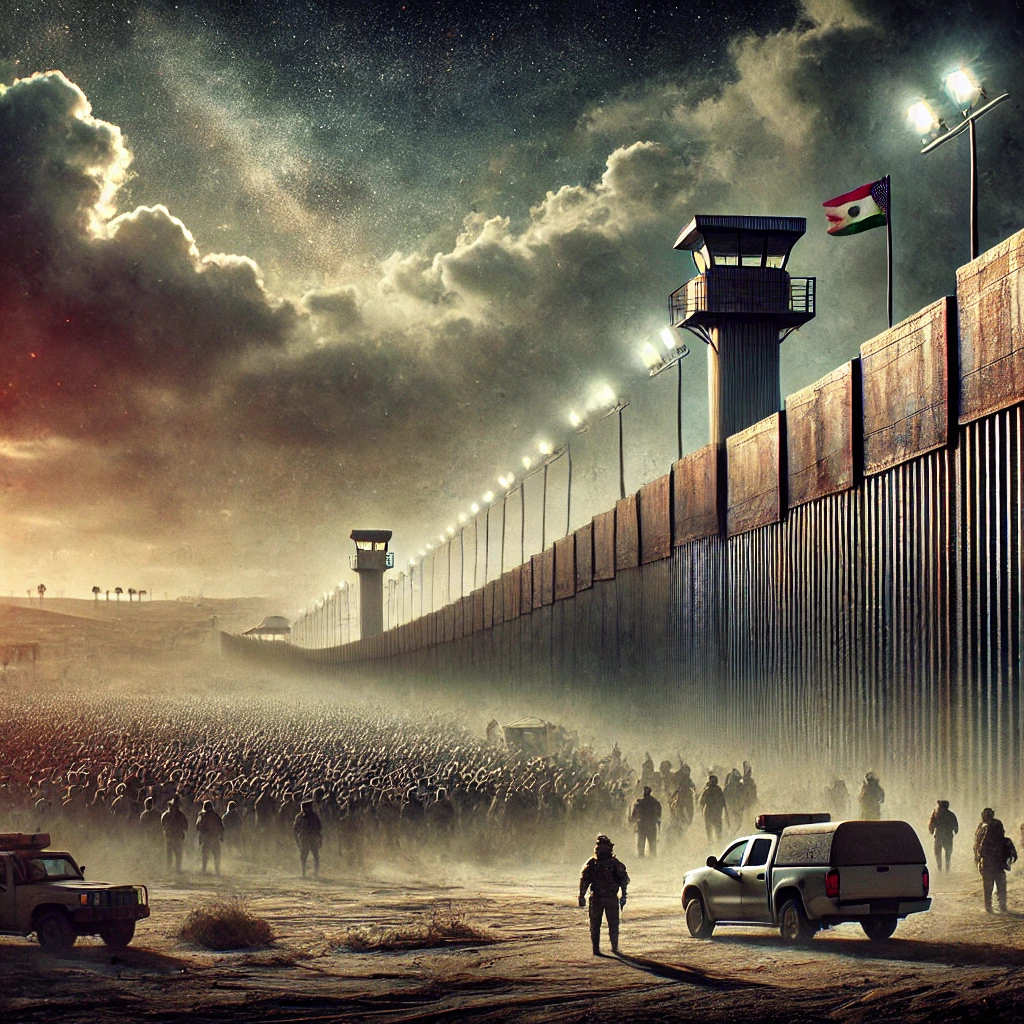
Trump’s surprise at Arab rejection revealed a fundamental ignorance of Middle Eastern reality. Egypt’s 18-meter steel wall along Gaza’s border wasn’t built in 2025—it was constructed starting in 2009, upgraded with deeper underground barriers in 2020, and maintained at enormous expense for 15 years before Trump ever mentioned Gaza displacement.
This wall received virtually no international condemnation. No UN resolutions. No BDS campaigns. No campus protests. Because Arab nations understood what Western nations deliberately ignored: Egypt wasn’t building barriers against refugees—it was building protection against organizational control that creates psychological walls within populations.
When Trump proposed his displacement plan in the 2025 Trump proposals, he was asking Egypt to import what its wall specifically defended against. The answer was inevitable.
The Pattern Trump Ignored: Three Experiments, One Conclusion
The 2025 Trump proposals would have worked—if history didn’t exist. But Jordan’s Black September taught Arab nations what accepting Palestinian organizations means: 10 days of warfare that nearly toppled Jordan’s monarchy, with PLO forces attacking Jordanian soldiers and establishing a state-within-a-state that required military expulsion.
Lebanon’s 15-year civil war provided the second lesson: the “Paris of the Middle East” transformed into Hezbollah’s military base, with 100,000+ killed and a demographic balance destroyed that will never recover. Lebanese Christians who once formed the majority now represent barely 30% of the population.
Kuwait’s 1991 mass expulsion of 400,000 Palestinians—after they collaborated with Saddam Hussein’s invasion—demonstrated what happens when oil-rich Gulf states acquire evidence of Palestinian organizational loyalty patterns.
Trump was asking Arab nations to repeat experiments they’d already conducted—with catastrophic results documented over 50 years.
⚠️ Understanding Civilizational Patterns
October 7th Vindication: Egypt’s Prophetic Wall
How October 7, 2023 proved Egypt right about what walls defend against.
Pattern recognition: how organizational networks operate across borders.
When strategic deception frameworks meet reality in Western democracies.
The Libya Gambit: When Desperation Meets Delusion
By July 2025, facing universal Arab rejection, Trump’s administration reportedly developed plans to relocate up to 1 million Palestinians to Libya. The proposal: offer Libya billions of dollars in frozen U.S. assets in exchange for accepting Gaza’s displaced population.
Libya—currently split between two rival governments, hosting multiple militias, experiencing ongoing civil conflict, and barely maintaining territorial integrity—was somehow supposed to successfully absorb 1 million Palestinians when oil-rich, stable Gulf monarchies with advanced infrastructure categorically refused.
The 2025 Trump proposals Libya plan revealed how thoroughly Trump’s administration misunderstood Arab reality. Libya wasn’t chosen because it made strategic sense. It was chosen because it was the only place left that couldn’t immediately say no—because it didn’t have a functioning government capable of coherent rejection.
Even this failed. No Arab state agreed to Trump’s displacement schemes, and the Libya proposal quietly disappeared from official statements by August 2025.
100,000 Exceptions That Prove The Rule
Trump could point to one apparent success: As of 2025, over 100,000 Gazans are living in Egypt. Doesn’t this contradict the universal rejection?
This is not a question of capacity. Several Gulf and regional Arab states already host extraordinarily large expatriate populations—often exceeding half their total population—many of them low- or semi-skilled workers. From a labor or demographic standpoint, Palestinians could easily replace portions of this existing foreign workforce. The fact that this substitution is deliberately avoided shows that the refusal is not economic or humanitarian, but political and organizational.
No—it proves the pattern. Egypt accepted wounded Palestinians for medical treatment, not populations for permanent resettlement. These 100,000 represent:
- Medical evacuees receiving treatment
- Temporary refuge with explicit return expectations
- Controlled entry with Egyptian security oversight
- No organizational structures allowed
Egypt’s acceptance of 100,000 wounded demonstrates precisely what the 2025 Trump proposals ignored: Arab states can manage individual humanitarian cases. What they absolutely refuse is accepting populations whose organizational structures bring the psychological warfare systems that destroyed Jordan, Lebanon, and threatened Kuwait.
The 100,000 in Egypt prove Egypt’s wall wasn’t about humanitarian cruelty—it was about organizational control prevention.
🔍 Explore The Evidence
Two State Delusion Exposed: Netanyahu’s 99.9% Vote
When reality collides with international consensus narratives.
How legal frameworks get weaponized in civilizational conflicts.
Numbers don’t lie—examining institutional bias through data.
Syria’s Silent Validation of Trump’s Failure
While Trump’s 2025 Trump proposals dominated headlines, Syria’s position validated everything this series documented. In December 2025, Syria’s UN delegate stated: “Our countries shoulder the vast majority of the burden as we’ve hosted Palestinian refugees since their displacement for decades.”
This wasn’t an offer to accept more—it was an explicit rejection of transferring UNRWA’s responsibilities to host states. Syria, which has maintained over 500,000 Palestinian refugees in controlled camps since 1948, was telling the international community: we’ve contained them for 75 years under Assad’s iron control, and we’re not taking responsibility for new populations.
Syria’s laboratory model—keeping Palestinians in permanent stateless limbo with economic rights but no citizenship, no political power, and no organizational freedom—represented the only “successful” Arab management of Palestinian refugees. Even Syria, with this brutal control system perfected over decades, rejected expanding its burden.
Trump was asking Arab nations to repeat Jordan’s war, Lebanon’s collapse, and Kuwait’s necessity for mass expulsion—when the only Arab state that avoided catastrophe did so through systematic suppression that Western democracies couldn’t replicate.
December 2025: The Wall Within Persists
As Trump’s displacement proposals faded from headlines, December 2025 events in Gaza revealed why Arab nations maintain their absolute rejection. Even with Hamas’s military capabilities severely degraded, even with Israeli control over territory, even with international pressure for displacement mounting—the psychological architecture Hamas built within Gaza’s population persisted.
This was what Egypt’s wall defended against. Not refugees fleeing war—but populations carrying organizational ideologies that build internal control systems within host nations. The 2025 Trump proposals would have imported into Egypt and Jordan what took Hamas 18 years to construct in Gaza: the infrastructure of psychological warfare that makes populations imprison themselves.
Arab nations learned what Trump never understood: you can defeat Hamas militarily, destroy tunnels, and eliminate leaders—but wall within that sustains it does not die that way. Like the demon Raktabīja in Hindu tradition, whose power caused new demons to be born whenever his blood touched the ground, this militant philosophy gives rise to new formations when displaced rather than eliminated. It travels with populations, reconstitutes itself in new locations, and embeds again over time. History shows that when this replication reaches scale, it ultimately forces outcomes like Jordan in 1970, Lebanon’s long collapse, or Kuwait’s mass expulsions in 1991.
🚨 Critical Analysis Series
The Genocide Inversion: How Hamas Weaponized Casualties (Part I)
Understanding the strategic framework behind casualty narratives.
The complete architecture of narrative warfare exposed.
When rights frameworks become weapons in asymmetric warfare.
What 144 Countries Voted For vs. What 57 Nations Built
The 2025 Trump proposals exposed the chasm between international rhetoric and regional reality. 144 countries voted for Palestinian statehood at the UN. Europe rushed to recognize Palestine in what observers called a “48-hour surrender.” Global institutions demanded Israeli withdrawal and Palestinian sovereignty.
But 57 Muslim-majority nations—the countries that actually border Palestinian populations, that speak the same language, share the same religion, and understand regional dynamics—said no with:
- Egypt’s 18-meter steel wall
- Jordan’s 1970 military expulsion
- Lebanon’s 15-year civil war
- Kuwait’s mass deportation of 400,000
- Syria’s controlled camp system
- Saudi, UAE, Qatar, Bahrain, Oman refusing any acceptance
- Turkey and Malaysia expressing support but taking zero refugees
Trump’s 2025 Trump proposals asked Arab nations to ignore their own experience, demolish their own walls, and import populations whose organizational structures their militaries had spent decades containing or expelling. The answer was as predictable as it was unanimous: absolutely not.
The Strategy Trump Validated: 75 Years of Permanent Refugees
Ironically, Trump’s failure validated the exact strategy this series documented: keeping Palestinians stateless, maintaining them as permanent refugees, and preventing their absorption into Arab nations serves a broader civilizational agenda that transcends humanitarian concerns.
When the 2025 Trump proposals collapsed under Arab rejection, what remained? Palestinians in Gaza, Palestinians in UNRWA camps across the Middle East, Palestinians maintained in demographic suspended animation exactly as they’ve been for 75 years. Trump’s displacement plans failed precisely because the existing system—keeping Palestinians as permanent refugees rather than resettling them—serves purposes that displacement would undermine.
The Right of Return strategy requires permanent refugee status. It requires UNRWA’s perpetual operations. It requires maintaining 5.9+ million registered refugees across generations. Trump’s proposals threatened this architecture by suggesting permanent resettlement—and Arab nations rejected it for the same reason they reject all permanent absorption: because the strategy depends on permanence of refugee status, not resolution through resettlement.
🌍 Global Pattern Recognition
Demographic Strategy Decoded: France Unrest
How demographic patterns create predictable civilizational conflicts.
Understanding how narrative frameworks obscure demographic realities.
Global coordination patterns in demographic transformation campaigns.
Egypt’s December 2025 Position: “We’ve Already Learned”
In December 2025, as Trump’s proposals continued generating headlines, Egypt maintained its absolute position: the wall stays, the border remains controlled, and no mass Palestinian resettlement occurs. President el-Sisi’s warnings were explicit—accepting refugees would bring militant groups into Sinai, threatening the 1979 Egyptian-Israeli peace treaty and potentially destabilizing the entire Sinai Peninsula.
But Egypt’s reasoning went deeper than security concerns. Egypt studied Jordan’s Black September, analyzed Lebanon’s demographic destruction, and observed Kuwait’s necessity for mass expulsion. The 2025 Trump proposals asked Egypt to conduct a fourth experiment when three previous trials produced:
-
Jordan: 10 days of civil war
-
Lebanon: 15 years of national destruction
-
Kuwait: Mass deportation of 400,000 people
Egypt built its 18-meter wall specifically to avoid becoming experiment number four. Trump was asking Egypt to demolish conclusions drawn from 50 years of Arab experience with Palestinian refugee populations. The answer was “we’ve already learned”—and the wall stays.
Jordan’s Demographic Mathematics: The Real Reason for Rejection
King Abdullah II’s immediate rejection of the 2025 Trump proposals rested on mathematics that Trump apparently never calculated. Jordan already hosts 2.3 million Palestinian refugees, with approximately 50% of Jordan’s population having West Bank-Palestinian roots. Adding Gaza’s 2 million would create a Palestinian majority exceeding 65-70% of Jordan’s total population.
Israeli ultranationalists have long suggested that Jordan should be considered the Palestinian state, allowing Israel to retain the West Bank. Jordan’s monarchy has vehemently rejected this scenario for obvious reasons: it would transform Jordan from a Hashemite kingdom into a Palestinian-majority state, with predictable consequences for Hashemite rule.
The UN’s December 2025 Theater: Demanding What Arab States Refuse
On December 5, 2025, the UN General Assembly renewed UNRWA’s mandate until June 2029, ensuring continued international funding for Palestinian refugee services. Eight days later, on December 12, the General Assembly adopted a resolution welcoming the ICJ’s advisory opinion on Israel’s obligations in occupied territories, demanding Israel facilitate humanitarian assistance including through UNRWA.
The cognitive dissonance was remarkable: the same international community that funded UNRWA’s operations for 75 years—thereby maintaining permanent refugee status rather than facilitating resettlement—demanded Israel accept obligations that 57 Muslim-majority nations absolutely refused.
When Trump’s 2025 Trump proposals asked Arab states to accept what UN resolutions implicitly demanded Israel accommodate, the response exposed the great deception: international institutions vote for Palestinian statehood, fund permanent refugee status, and condemn Israeli “occupation”—while the 57 nations that could actually resettle Palestinian refugees maintain walls, enforce expulsions, and categorically refuse acceptance.
Trump inadvertently proved what this series documented: the UN’s Palestinian project was always theater. Arab states knew it. Israel knew it. Only Western nations and Trump’s administration seemed genuinely surprised when theatrical resolutions met concrete rejection.
📖 Deep Dive Resources
The Fastest Growing Religion: Demographic Data Analysis
Understanding population growth patterns and their geopolitical implications.
How demographic shifts create predictable political transformations.
Case studies in demographic transformation across different nations.
What The 2025 Trump Proposals Really Proved
When historians analyze 2025, Trump’s displacement proposals will stand as accidental validation of this entire series. The 2025 Trump proposals proved:
1. Arab rejection is absolute and unanimous
No amount of economic incentives, diplomatic pressure, or strategic reasoning changes the calculus that Jordan’s Black September, Lebanon’s civil war, and Kuwait’s mass expulsion established over 50 years.
2. Physical walls represent learned conclusions
Egypt’s 18-meter barrier isn’t just border security—it’s physical evidence of lessons Arab nations learned through catastrophic experience.
3. International rhetoric diverges completely from regional reality
The same institutions demanding Israeli acceptance of obligations couldn’t convince a single Arab state to accept what those obligations would require.
4. The strategy requires permanent refugee status
Trump’s proposals failed because permanent resettlement contradicts the 75-year Right of Return strategy that depends on maintaining generational refugee claims.
5. Psychological walls outlast regime changes
Even with Hamas degraded, the wall within Gaza’s population persists—validating Arab fears about importing organizational ideologies that survive military defeat.
The 2025 Trump proposals weren’t rejected due to insufficient economic incentives or inadequate diplomatic preparation. They were rejected because Trump asked Arab nations to forget everything Jordan learned in 1970, Lebanon learned through 15 years of war, and Kuwait learned necessitating mass expulsion in 1991.
When Muslim countries refuse to absorb Palestinian refugees and insist that only a Palestinian state must house Palestinians, does this not indicate that the objective is not refugee welfare but the elimination of Israel and the expansion of Islam beyond its existing geographic boundaries?
Conclusion: The Year Arab Experience Educated American Ignorance
2025 will be remembered as the year the 2025 Trump proposals forced into public view what Arab nations had spent 75 years demonstrating through walls, wars, and mass expulsions.
Yet despite the clarity of the lesson delivered by the Arab reaction to Trump’s proposal, Western governments chose deliberate blindness—refusing to internalize those lessons, a refusal later formalized through the September 2025 New York Declaration and the UN two-state resolution adopted later that year.
When Trump asked Egypt and Jordan to accept Gaza’s displaced population, he received the education that three previous experiments—Jordan’s Black September, Lebanon’s transformation from “Paris of the Middle East” to a Hezbollah state, and Kuwait’s necessity for deporting 400,000 Palestinians—had already provided.
The 2025 Trump proposals taught Trump what this series documented: 57 Muslim-majority nations don’t just refuse Palestinian refugees—they build walls to prevent them, wage wars to expel them, and maintain brutal control systems to contain them. This isn’t humanitarian failure or Islamic hypocrisy. This is pattern recognition from nations that conducted the experiments, suffered the consequences, and drew conclusions that concrete barriers now enforce.
Egypt’s wall stays. Jordan’s demographic mathematics remain unchanged. Lebanon’s civil war echoes as permanent warning. Kuwait’s mass expulsion stands as precedent no Gulf state will repeat by accepting what Kuwait had to forcibly remove.
Trump discovered in 2025 what Arab nations learned through 50 years of catastrophic experience: accepting Palestinian refugee populations means importing organizational structures that build walls within hearts, create states-within-states, and eventually require military expulsion or national destruction. The 2025 Trump proposals failed because 57 Muslim nations already know what happens next—and they built walls, waged wars, and conducted mass expulsions to ensure it never happens again.
As Muslim societies, do these Arab already know—through doctrine, history, and lived experience—that this political philosophy remains peaceful only under control, and that once autonomy and permissive conditions emerge, it predictably erupts into violence, as demonstrated by acts of Hamas on 7 October 2023?
When historians ask why Trump’s displacement proposals collapsed within weeks, the answer is simple: because 57 Muslim nations voted “no” with concrete and steel long before Trump voted “yes” with words.
The walls stay. The rejection is absolute. And the 2025 Trump proposals proved exactly what this series documented: Arab nations don’t need education about Palestinian refugees—they have 75 years of experience teaching lessons that 18-meter steel barriers now enforce.
Feature Image: Click here to view the image.
Videos
Glossary of Terms
- 2025 Trump Proposals: A set of displacement and resettlement ideas announced by U.S. President Donald Trump in February 2025 proposing relocation of Gaza’s population to neighboring Arab states.
- Black September (1970): A civil conflict in Jordan triggered by PLO activities, ending in military expulsion of Palestinian armed groups.
- PLO (Palestine Liberation Organization): A political–military organization formed in 1964 that historically operated across multiple Arab host states.
- Hamas: An Islamist Palestinian organization governing Gaza since 2007, combining militant, political, and social-control structures.
- State-within-a-State: A condition where non-state actors exercise parallel authority inside a sovereign nation.
- Egypt–Gaza Barrier: A fortified border system constructed by Egypt beginning in 2009 to prevent militant infiltration from Gaza.
- Permanent Refugee Status: The inherited refugee classification maintained by UNRWA across generations of Palestinians.
- UNRWA: United Nations Relief and Works Agency, uniquely mandated to support Palestinian refugees without resettlement.
- Right of Return Strategy: A political framework maintaining Palestinian refugee status to support future territorial claims.
- Organizational Ideology: The political and social structures carried by militant movements that persist beyond leadership or territory.
#Trump #MiddleEast #PalestinianRefugees #UNRWA #MiddleEastPolitics #RefugeeCamps #HinduinfoPedia #Gaza #Hamas #MiddleEast #Geopolitics #RightOfReturn #Palestine #Refugees #TheWallsoftruth
Hindu Philosophy Resources:
Understanding psychological freedom through Vedic wisdom:
- Patanjali Yoga Sutras: Vritti Control – Managing mind modifications for psychological freedom
- Dattatreya’s Wisdom: Liberation From Attachment – Ancient teachings on internal freedom
- Dharma and Ethics in Conflict – Vedic principles for righteous action
Understanding Global Patterns:
- Regime Change Playbook: Color Revolution Operations – How psychological warfare operates internationally
- Muslim Brotherhood in France: International Backers – Organizational networks building parallel power structures
Previous Blog of he Series
- https://hinduinfopedia.com/egypt-gaza-wall-the-hidden-truth-57-muslim-nations/
- https://hinduinfopedia.com/black-september-jordan-the-forgotten-war-that-changed-the-arab-world/
- https://hinduinfopedia.com/lebanon-civil-war-from-paris-of-the-middle-east-to-hezbollah-state/
- https://hinduinfopedia.com/gulf-states-refugee-policy-why-the-wealthy-arabs-said-no-to-palestinians/
- https://hinduinfopedia.com/palestinian-refugees-why-no-muslim-country-will-take-them/
- https://hinduinfopedia.com/right-of-return-to-palestine-the-strategy-behind-75-years-of-refugees/
- https://hinduinfopedia.com/the-berlin-wall-of-gaza-what-happens-when-hamas-falls/
- https://hinduinfopedia.com/syrias-palestinian-refugee-laboratory/
Follow us:
- English YouTube: https://www.youtube.com/@Hinduofficialstation
- Hindi YouTube: https://www.youtube.com/@HinduinfopediaIn
- X: https://x.com/HinduInfopedia
- Instagram: https://www.instagram.com/hinduinfopedia/
- Facebook: https://www.facebook.com/Hinduinfopediaofficial
- Threads: https://www.threads.com/@hinduinfopedia
[…] भारत/GB […]
[…] Gaza War And Trump Proposal That Year 57 Muslim Nations Knew […]