


October 7th Vindication: Egypt’s Prophetic Wall
Part 2: The Two State Solution Vs Security Realities
When fifty-seven Muslim nations refuse Gaza refugees yet urge the West to accept them, it suggests an understanding the so-called international community will not acknowledge.
Explore why October 7th Vindication Argument Holds
On September 26, 2025, Benjamin Netanyahu stood before the United Nations and presented the evidence that solidified the October 7th Vindication — a moment that should have ended the two-state debate forever.
“Nearly 90% of Palestinians supported the attack on October 7th.”
Not just failed to condemn. Not remained silent. Supported. Celebrated. Danced on rooftops. Distributed candy in the streets. Both in Gaza and the West Bank.
Yet what makes October Seventh the ultimate vindication is that Egypt anticipated this outcome long before it occurred.
That’s why they built that wall. That’s why they keep it sealed. That’s why, as we are in the process of exploring in our comprehensive investigation of Egypt’s Gaza wall and the hidden truth about 57 Muslim nations, not a single Muslim-majority country will accept Palestinian refugees—despite sharing language, religion, and culture.
They learned the lesson. The West refuses to.

The Steel Wall: Egypt’s Billion-Dollar Message
Egypt’s relationship with Gaza is not theoretical; it is rooted in direct and often traumatic experience.
From 1948 to 1967, Egypt occupied Gaza. They could have established a Palestinian state there anytime. They didn’t. Instead, they kept Palestinians in refugee camps and denied them citizenship.
When Israel captured Gaza in 1967 during the defensive war detailed in our piece on the Yom Kippur War, Egypt didn’t demand it back in the 1979 peace treaty. They took back the Sinai Peninsula—but explicitly rejected Gaza.
Think about that. Egypt negotiated for every inch of Sinai, but didn’t want Gaza back even when Israel was willing to return it.
In 2009, Egypt began constructing what would become one of the most sophisticated border barriers in the world—an underground steel wall extending 60 feet deep to block Hamas tunnels.
The cost? Over $1 billion.
This wasn’t a temporary fence. This was permanent infrastructure including:
- Underground steel plates extending 18 meters deep
- Sophisticated surveillance systems
- Military checkpoints every few kilometers
- Complete sealing of the Rafah crossing except for rare humanitarian cases
Egypt deployed thousands of troops to the Sinai specifically to prevent Palestinian infiltration. They’ve killed Palestinians trying to breach the border. They’ve destroyed thousands of smuggling tunnels.
A Muslim-majority nation, sharing borders, language, and religion with Gaza, treats Palestinians as an existential threat requiring military containment.
But when Israel does the same thing, it’s called “occupation” and “apartheid.”
The 90% That Explains Everything
Let’s be precise about what surveys and eyewitness reports indicated some segments of the Palestinian public supported on October Seventh: brutal acts of violence including murders, hostage-taking, and atrocities.
Polls cited by Israeli officials and independent research institutes suggested support for the attacks ranged from about seventy to ninety percent, depending on region and timing.
Such reactions reflect a profound moral and social crisis within parts of the population, even though not all individuals shared those sentiments.
The same pattern emerged after 9/11, as we explored in our analysis of religion and politics shaping global conflicts—Palestinians distributed candy, danced in the streets, and celebrated the mass murder of 3,000 Americans.
As we documented in our analysis of religious demographics manifesting in real-time, this represented the authentic expression of a society that has spent generations being indoctrinated in genocidal antisemitism through schools, mosques, media, and government institutions.
When an overwhelming share of a population publicly celebrates atrocities, it reflects a deep social crisis.
Some researchers attribute this reaction to decades of blockade, poverty, and political despair that radicalized a generation. Others point to the influence of hard-line religious interpretations that glorify violence against perceived enemies and encourage martyrdom. The reality likely combines both — structural hardship intertwined with ideological instruction that sanctifies conflict.
Black September and Lebanon: The Blood Lessons
Egypt isn’t the only Arab nation that learned through experience.
In 1970, the PLO—having been granted refuge in Jordan—attempted to overthrow the Jordanian monarchy. As we documented in our analysis of Black September and the forgotten war that changed the Arab world, King Hussein was forced to kill thousands of Palestinians to prevent his kingdom’s destruction.

Read the Historical Deep-Dive →
The PLO had established a state within a state, created their own checkpoints, collected “taxes,” and attempted to assassinate King Hussein multiple times.
Jordan’s response? Expulsion of the PLO to Lebanon.
The result there was even worse. As we chronicled in Lebanon’s transformation from the Paris of the Middle East to a Hezbollah state, the PLO’s arrival triggered:
- A 15-year civil war (1975-1990)
- Death of roughly 120,000 people
- Complete destruction of Beirut’s cosmopolitan character
- Christian exodus—Lebanon went from 60% Christian to roughly 30% today
- Establishment of Hezbollah, a state within a state, which now effectively controls Lebanon
The pattern was identical: PLO granted refuge → PLO establishes armed mini-state → PLO uses host territory to attack Israel → Host country suffers catastrophic consequences.
Lebanon today remains a fractured state heavily influenced by an Iranian-backed militia. The PLO’s presence and ensuing conflicts devastated what was once the most cosmopolitan Arab society in the Middle East.
The 57-Nation Consensus Nobody Discusses
Here’s the most damning fact: 57 Muslim-majority nations in the Organization of Islamic Cooperation have collectively refused to accept Palestinian refugees in any significant numbers.
These nations:
- Share the same religion (Islam)
- Share the same language (Arabic, for most)
- Claim to champion the “Palestinian cause”
- Demand the West accept millions of refugees from other Muslim countries
But they won’t take Palestinians.
Kuwait learned its lesson when Palestinians supported Saddam Hussein’s 1990 invasion. After liberation, Kuwait expelled 400,000 Palestinians—about one-third of its population at the time.
The Gulf states—with enormous wealth, vast territory, and need for labor—have categorically refused Palestinian refugees despite having every reason to accept them.
Syria kept Palestinians in permanent refugee camps with severely restricted rights for 70 years, never granting citizenship or autonomy that could threaten Assad’s regime.
This pattern reflects the regional assessment of risk by governments that have dealt directly with militant movements.
Their caution is informed by direct experience rather than abstract diplomacy. As we explored in our analysis of how religious demographics manifest in action, when Muslim-majority nations universally reject a Muslim population, Western nations should be asking why.
The Gaza Experiment That Proved Everything
Netanyahu made this point explicitly in his UN speech:
“They effectively had a Palestinian state—in Gaza. What did they do with that state? Peace? Co-existence? No, they attacked us time and time again.”
When Israel withdrew from Gaza in 2005, every Israeli settler was evacuated, the IDF completely withdrew, and greenhouses and infrastructure were left behind. Gaza received billions in international aid.
This was the test case for Palestinian statehood.
The result:
- Hamas takeover in 2007 after “democratic” elections
- Execution of Fatah members, some thrown off rooftops
- Transformation of Gaza into a massive military base
- Terror tunnels costing hundreds of millions that could have built schools and hospitals
- October 7th massacre
As we documented in our piece on the human rights paradox, some analysts note that, over decades and under certain accounting methods, international aid to the West Bank and Gaza has been exceptionally high on a per-person basis — at times compared to post-war European aid programs such as the Marshall Plan. Despite vast international support, Gaza’s reconstruction yielded little enduring infrastructure; instead, resources were diverted toward tunnels and weapons systems.

Supporters of Israel see Gaza’s collapse as proof that self-rule failed because its leadership invested in war rather than welfare.
Both governance failures and external factors including states like Iran, shaped the tragic outcome — one reinforcing the other.
The Christian Exodus: Demographic Cleansing in Real Time
Netanyahu cited another devastating statistic:
When Bethlehem, the birthplace of Jesus, was under Israeli control, 80 percent of its residents were Christians. But since the Palestinian Authority took control, that number has dwindled to under 20 percent.
This mirrors patterns across the Middle East:
- Egypt’s Coptic Christians shrinking from 20% to perhaps 10%
- Iraq’s Christians reduced from 1.5 million to under 200,000
- Lebanon’s Christians declining from 60% to roughly 30%
Not only has Israel’s Christian population grown since 1948, but the Muslim proportion of the population has also increased. As of 2023, Muslims comprised approximately eighteen point one percent of Israel’s residents (around 1.78 million people), up from roughly sixteen percent a decade and a half earlier. The community continues to grow at about two percent annually.
Yet many Western Christian leaders still urge Israel to cede territory to the Palestinian Authority — the same administration under whose tenure Bethlehem’s Christian population has sharply declined.
This demographic contrast highlights a broader pattern — Israel’s pluralism expanding even as regional intolerance deepens.
The Media Blackout: Curated Deception
Here’s a question: Why don’t most Westerners know about Egypt’s billion-dollar wall sealing off Gaza?
Because it contradicts the prevailing narrative.
If Gaza is a ‘prison,’ then Egypt is its co-jailer — and Egypt shares infinitely more cultural, linguistic, and religious commonality with Gazans than Israel does.
Yet while every Gulf state has expelled or excluded Palestinian residents over the years, Israel continues to employ, educate, and provide healthcare to thousands of Palestinians and help them grow within their state. There can be few clearer demonstrations of tolerance in a region that has otherwise turned them away.
As we documented in our analysis of how media manipulation works across Western democracies, there’s systematic suppression of facts that contradict the preferred narrative.
Western media will show you:
- Every Israeli checkpoint (framed as oppression)
- Every Gaza casualty (with no context about Hamas human shields)
- Every settlement expansion (as obstacle to peace)
Western media will not show you:
- Egypt’s sealed border and underground steel wall
- Jordan’s history with the PLO
- Lebanon’s destruction by Palestinian militias
- The PA’s “Pay for Slay” program
- The 90% support for October 7th
Media critics see selective reporting that favors a two-state narrative and downplays regional realities.
Conversely, journalists and rights groups contend that coverage focuses on humanitarian impact because access inside Gaza is restricted and facts are contested.
Bias and limitations often intertwine — what one side sees as deliberate omission, the other views as structural constraint.
The Ideological Core: It’s Not About Borders
Many observers, particularly within Israel and Arab governments, argue that this conflict is rooted primarily in ideology rather than geography.
Yet others note that unresolved questions of borders, sovereignty, and daily economic hardship still sustain the conflict’s intensity.
Ideology drives motivation, but unresolved territorial and social grievances continue to supply its fuel.
The Hamas charter explicitly calls for violent struggle against Jews not only in Israel but globally. The Palestinian Authority isn’t meaningfully different. As we explored in our analysis of secularism in Islam and interpreting Quranic texts, there’s a fundamental theological component to this conflict that Western secularists refuse to acknowledge.
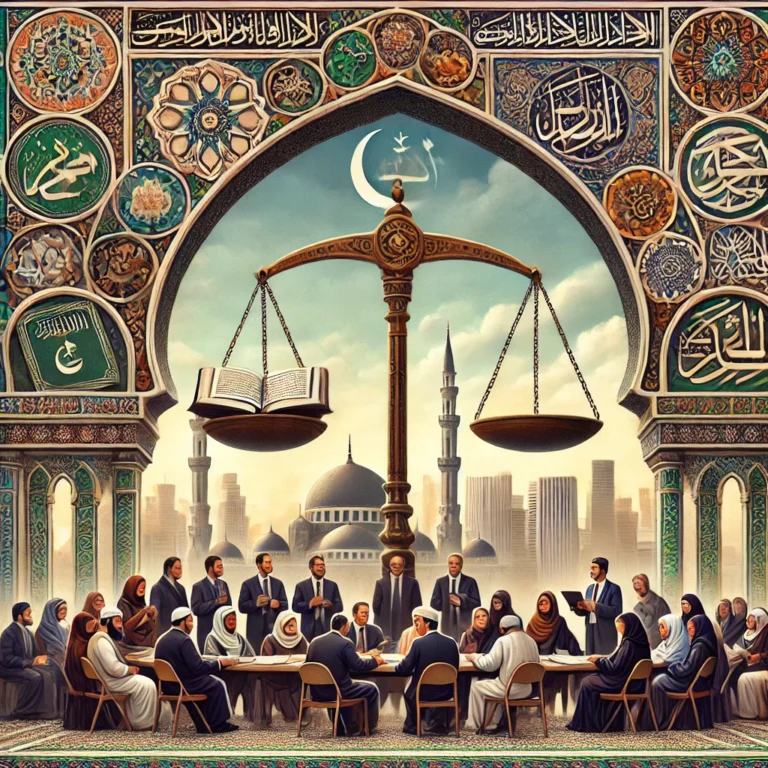
Explore the Theological Analysis →
This is why every peace offer has been rejected. As we explored in our piece on the Oslo Accords and their significance, Arafat signed Oslo in English for Western audiences, then gave Arabic speeches promising his people that Oslo was merely a tactical step toward Israel’s elimination.
This dual messaging has been the consistent pattern of Palestinian leadership for decades. Arab leaders recognized this immediately. They knew Oslo would fail because Palestinian nationalism is fundamentally eliminationist, not territorial.
The Intelligence That Saves Lives
Netanyahu revealed something Western publics rarely hear:
“Behind closed doors, many of the leaders who publicly condemn us, privately thank us. They tell me how much they value Israel’s superb intelligence services that have prevented time and again terrorist attacks in their capitals.”
He quoted General George Keegan: “If the United States had to gather on its own the intelligence that Israel gives us, we would have to establish five CIAs.”
Arab intelligence services also benefit from Israeli cooperation. They know Hamas and Islamic Jihad don’t limit their ambitions to Israel—they threaten any government that doesn’t conform to their extremist vision.
This is why Egypt coordinates with Israel on Gaza security. This is why Jordan maintains quiet cooperation. This is why Gulf states normalized relations through the Abraham Accords—a dynamic we explored in our analysis of religious tolerance algorithms and how governments manage Islamist constituencies.

Western Dilemma: The Same Ideology at Home
Here’s the bitter irony: Western nations lecturing Israel about “peace” are increasingly dealing with the same Islamist radicalization in their own countries.
As we documented in our analysis of demographic continuity in France, European cities now have no-go zones, Islamist mob violence over Mohammed cartoons, teachers beheaded for showing images in class, and Jewish communities requiring armed security.

Read the European Case Study →
Netanyahu referenced this: “I think many of you are already feeling in your own societies the radical Islamist surge. You know deep down that Israel is fighting your fight.”
The same ideology causing 90% of Palestinians to celebrate October 7th is the same ideology driving radicalization in Bradford, Malmö, and Paris suburbs.
Western leaders who demand Israel make peace with this ideology while simultaneously struggling to manage its manifestation in their own countries are engaged in catastrophic cognitive dissonance.
The Abraham Accords: What Strength Enables
The Abraham Accords—normalization between Israel and UAE, Bahrain, Morocco, and Sudan—happened not because of concessions but because of strength.
Arab nations normalized because they recognize Israel as permanent and powerful, want Israeli technology and security cooperation, fear Iran more than they care about Palestinian demands, and have concluded Palestinians will never accept any peace anyway.
As we explored in our piece on Arafat’s historic visit to Israel and subsequent failures, Arab nations watched decades of Palestinian rejections and concluded they were tired of being held hostage to Palestinian maximalism.
Netanyahu believes that after Hamas is defeated, not just Saudi Arabia but potentially Indonesia—the world’s largest Muslim nation—could normalize relations.
This is the opposite of Western conventional wisdom. The West insists peace requires Israeli concessions. Reality shows peace comes from Israeli strength and Palestinian defeat.
Empirical Learning vs. Ideological Blindness
October 7th wasn’t an aberration. It was validation that:
- Egypt was right to build that wall
- Jordan was right to expel the PLO
- 57 Muslim nations were right to refuse refugees
- Israel’s security concerns were never paranoia
- The two-state solution died in the celebrations on October 7th
Arab nations learned through blood—their own citizens’ blood spilled by Palestinian terror groups that turned on every host nation.
Many in the West still frame the conflict through idealistic diplomacy, while others believe that continued confrontation ensures endless war.
The debate reflects differing experiences: Western societies distant from the threat emphasize reconciliation, whereas regional states shaped by direct violence prioritize security first.
Each perspective carries moral weight but distinct practical consequences.
Netanyahu’s response is clear: We choose to learn from Egypt, not from you.
When Prime Minister Netanyahu presented his resolution before the Knesset rejecting any unilateral recognition of a Palestinian state, the result was overwhelming: 99 in favour, 9 against.
Yet those nine dissenting votes came exclusively from the Arab Muslim parties — Ra’am and Hadash-Ta’al. Every one of their serving members is a Muslim MK; none from the secular or Jewish factions opposed the motion.
It is worth noting, however, that not all Muslim legislators voted against the government. Of the fifteen Muslim members currently serving in the Knesset, six supported the government’s position — a reminder that even within Israel’s Muslim political community, perspectives on statehood and sovereignty are far from uniform. Yet this numerical variation does not alter the broader symbolism of the vote, which reflected a clash of ideological foundations more than party lines.
This wasn’t just a political difference of opinion; it was an ideological declaration. In Islamic theology, sovereignty belongs to Allah — not to the modern nation-state. The highest allegiance is to the Ummah, the universal fraternity of believers that transcends borders. When such theology collides with civic nationalism, faith inevitably outranks flag — a truth that the ‘haves’ among the community publicly disown, even as their institutions, charities, and clerics continue to preserve it beneath layers of modern rhetoric.
These nine MKs, though elected representatives of the Israeli state, voted in line with a worldview that regards Islamic solidarity as a higher moral order than Israeli citizenship. Their “no” was not accidental dissent — it was theological consistency. In their frame, supporting a two-state solution wasn’t about coexistence; it was about restoring Islamic unity over territory once under Dar al-Islam.
The ninety-nine to nine division symbolizes more than parliamentary arithmetic; it underscores the enduring tension between civic nationalism and transnational religious identity. It proves that Israel’s security doctrine isn’t rooted in prejudice but in experience: even inside its own legislature, ideology can override nationality.
The vote validated what Egypt, Jordan, and Lebanon learned through blood — and what 57 Muslim nations quietly acknowledge by refusing Palestinian refugees. You don’t build a state on theology that denies the state’s right to exist.
That is why the ninety-nine to nine Knesset result was not extremism but empiricism — the cumulative judgment of nations determined not to repeat a fatal experiment.
You don’t grant sovereign authority to any leadership or movement whose public messaging glorifies violence or denies another people’s right to exist.
Egypt already knew this. That’s why they built the wall 15 years before October 7th.
The only question now is how many more October Sevenths the world must witness The only question now is how many more October Sevenths the world must witness before recognizing the lessons that regional nations have already internalized.
Next in series: “The Genocide Inversion: How Hamas’s Human Shield Strategy Became Israel’s War Crime”
Feature Image: Click here to view the image.
Videos
Glossary of Terms
- October 7th Vindication: Refers to the argument that the Hamas-led October 7, 2023 attacks validated Israel’s long-standing security warnings and exposed flaws in the two-state premise.
- Two-State Solution: A diplomatic proposal envisioning independent Israeli and Palestinian states coexisting side by side.
- PLO (Palestine Liberation Organization): A coalition of Palestinian nationalist groups founded in 1964, once recognized as the representative of the Palestinian people.
- Black September: The 1970 conflict in Jordan when the PLO attempted to overthrow King Hussein’s government, resulting in massive casualties.
- Abraham Accords: Normalization agreements between Israel and several Arab nations beginning in 2020, reshaping Middle-Eastern alliances.
- Hamas Charter: The foundational document of Hamas that calls for armed jihad and the destruction of Israel.
- Rafah Crossing: The sole border crossing between Egypt and Gaza, heavily restricted since 2009 for security reasons.
- Marshall Plan: The U.S. economic program that rebuilt Western Europe after World War II; used here for aid comparison with Gaza.
- Organization of Islamic Cooperation (OIC): A bloc of 57 Muslim-majority nations coordinating political and religious positions.
- Oslo Accords: 1990s peace agreements between Israel and the PLO aiming for gradual self-rule and eventual two-state resolution.
- Hezbollah: An Iranian-backed Shiite militant group and political party dominating Lebanon’s security apparatus.
- Pay-for-Slay Program: Policy of the Palestinian Authority providing stipends to families of individuals involved in attacks on Israelis.
- Cognitive Dissonance: Psychological discomfort experienced when beliefs clash with evidence—used to describe Western leaders’ denial of Islamist ideology.
- Genocide Inversion: The rhetorical tactic of accusing Israel of genocide while ignoring Hamas’s deliberate human-shield strategy.
#October7th #Israel #Gaza #MiddleEast #HinduinfoPedia #TheTwoStateSolutionVsSecurityRealities
Earlier Blog of the Series
Follow us:
- English YouTube: https://www.youtube.com/@Hinduofficialstation
- Hindi YouTube: https://www.youtube.com/@HinduinfopediaIn
- X: https://x.com/HinduInfopedia
- Instagram: https://www.instagram.com/hinduinfopedia/
- Facebook: https://www.facebook.com/Hinduinfopediaofficial
- Threads: https://www.threads.com/@hinduinfopedia
[…] https://hinduinfopedia.com/october-7th-vindication-egypts-prophetic-wall/ […]
[…] October 7th vindication of Egypt’s prophetic wall shows even Muslim nations recognize this pattern and build defenses against […]
[…] October 7th Vindication: Egypt’s Prophetic Wall How October 7, 2023 proved Egypt right about what walls defend against. […]
[…] https://hinduinfopedia.com/october-7th-vindication-egypts-prophetic-wall/ […]
[…] […]
[…] […]
[…] RELATED ANALYSIS: October 7th Vindication: Egypt’s Prophetic Wall […]
[…] […]
[…] Read the analysis → […]
[…] See how both nations learned from Western unreliability: Abraham Accords and Peace Through Strength […]
[…] देखें कि दोनों राष्ट्रों ने पश्चिमी अविश्वसनीयता से कैसे सीखा: इब्राहीम समझौते और शक्ति के माध्यम से… […]
[…] the Wealthy Arabs Said No ➡️ Lebanon: From Paris of the Middle East to Hezbollah State ➡️ October 7th Vindication: Egypt’s Prophetic Wall “When 57 Muslim nations refuse, the pattern becomes […]
[…] देकर पुरस्कृत करना कितना निरर्थक है। उन्होंने गाज़ा को घेरने के मिस्र के दश…—एक दूरदर्शी कदम जिसने सिद्ध किया कि […]
[…] analogy that exposed the absurdity of rewarding October 7’s perpetrators with statehood. He vindicated Egypt’s decades-old decision to wall off Gaza—a prophetic act that proved Palestinians don’t want a state *next to* Israel, they want a […]
[…] • भाग दो: सात अक्टूबर की पुष्टि: मिस्र की … […]
[…] https://hinduinfopedia.com/october-7th-vindication-egypts-prophetic-wall/ […]
[…] series examining Netanyahu’s UNGA speech: • Part 1: Two-State Delusion Exposed • Part 2: October 7th Vindication: Egypt’s Prophetic Wall • Part 3: The Genocide Inversion I • Part 7: Genocide Survivors Charged With […]
[…] […]
[…] October 7th Vindication: Egypt’s Prophetic Wall […]
[…] October 7th Vindication: Egypt’s Prophetic Wall […]
[…] विश्लेषण पढ़ें → […]
[…] Syria’s camps teach the darkest lesson in the Palestinian story: suffering can be maintained indefinitely if it serves strategic purposes. Refugees can be kept stateless for generations if the security architecture is robust. International humanitarian systems can be weaponized to perpetuate rather than solve crises. […]