


Architectural Wonder of India: The Kailasa Temple Ellora
Marvel of Kailasa Temple at Ellora
Welcome to the first installment of our series exploring India’s architectural marvels, starting with the Kailasa Temple at Ellora. This series is designed to educate an audience about India’s profound contributions to architectural genius, highlighting marvels rich in history and complexity. The Kailasa Temple, known for its grandeur and intricacy, is a prime example of an Architectural Wonder of India. Not constructed with bricks, but sculpted from a single mountain, this 8th-century masterpiece, known as Cave 16, stands as the world’s largest monolithic creation—a marvel that defies time and logic.
India, a land of vibrant culture and rich heritage, has been a beacon of scientific and philosophical excellence for centuries. From the ancient Indus Valley Civilization to modern-day technological advancements, India’s contributions to human knowledge and progress are undeniable. Nestled in Maharashtra’s Ellora Caves, the Kailasa Temple showcases the country’s deep-rooted heritage in science, art, and spirituality. This temple, a tribute to Lord Shiva that rivals icons like the Pyramids or Petra, remains a quiet giant, its splendor awaiting global recognition. As we uncover the layers of this architectural wonder, we invite you to journey with us through a narrative that intertwines India’s past achievements with timeless spiritual and philosophical insights. What makes this temple so extraordinary? Let’s unveil its story.
A Mountain Reborn
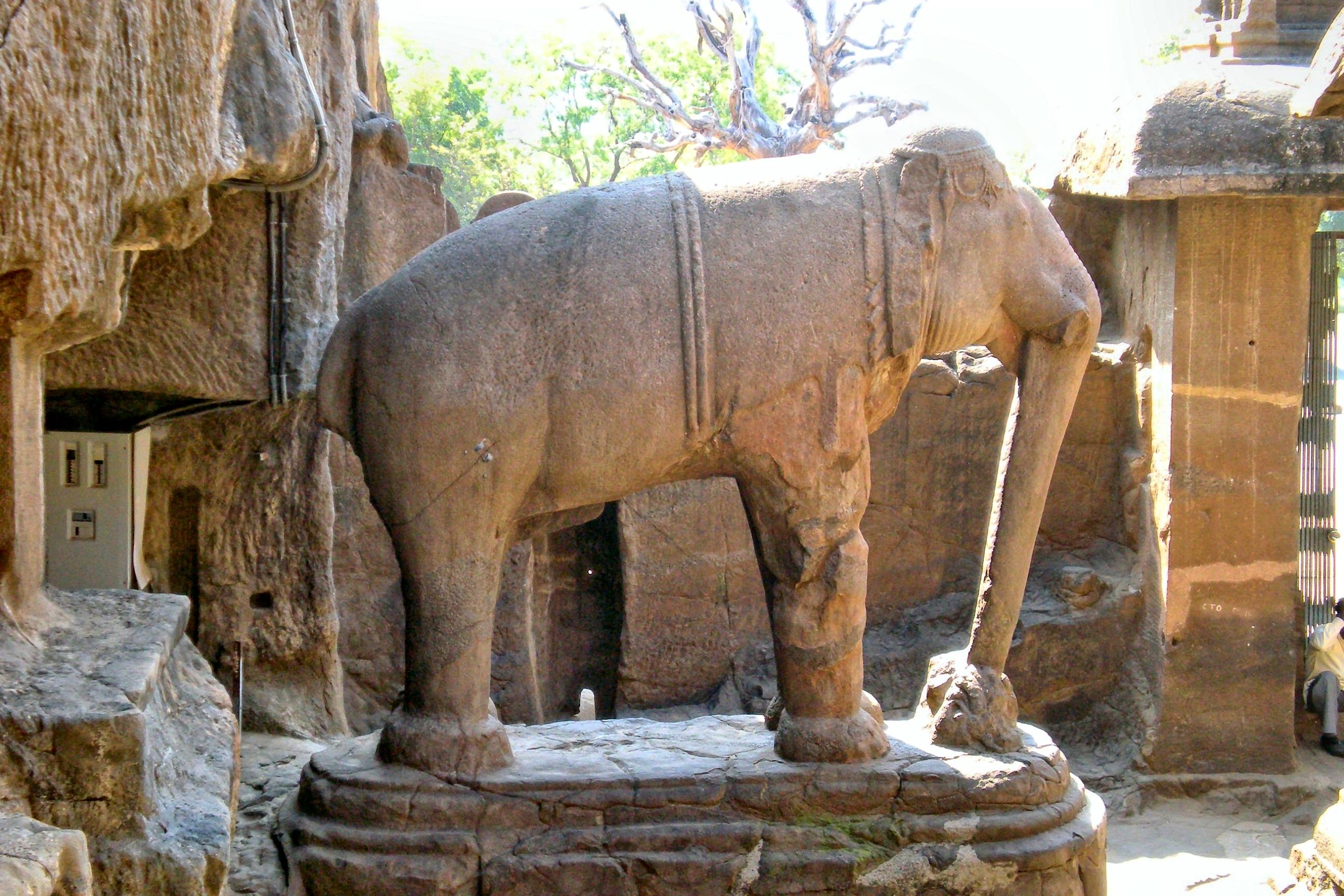
The Heart of the Monolith
An exquisite elephant sculpture carved from a single basalt rock, part of the Kailasa Temple at Ellora, showcasing the remarkable craftsmanship of ancient Indian artisans. [Credit https://flickr.com]Step into the courtyard, and a massive Nandi bull, over two storeys high, gazes at a towering Shiva lingam in the sanctum. A flat-roofed mandapa, propped by 16 pillars, supports a Dravidian-style shikhara, while elephants at the base seem to shoulder the weight—an illusion hiding the truth: it’s all one unbroken rock. In 1682, Mughal Emperor Aurangzeb aimed to shatter it, but the basalt held firm. Today, it hums with pilgrims’ prayers, a living shrine unbroken after 1,200 years.
Faith and Power in Stone
Dedicated to Shiva—destroyer, meditator, cosmic dancer—the temple, Architectural Wonder of India, captures his wild spirit. The Rashtrakutas, led perhaps by King Krishna I, carved it as a dual symbol: devotion to the divine, might over rivals. Some whisper it took just 18 years, a timeline that stuns modern minds and hints at lost skills. From Elephanta’s Trimurti to Badami’s Nataraja, rock-cut echoes dot India, but this temple’s ambition towers above them.
A Hidden Giant
Why isn’t it a global star? India’s 38 UNESCO sites, like the Taj Mahal, steal the limelight, and its active worship lacks the “lost ruin” mystique of Machu Picchu. Yet, that’s its magic. Untouched by tourist crowds, it offers a raw brush with history. For explorers worldwide, it’s a chance to meet a titan that redefines ancient prowess, its secrets begging to be told.
The Call of the Wonder
Stand beneath it, dwarfed by a mountain turned miracle. It doesn’t shout for fame—it commands awe in stillness. This is just the start; deeper tales await. Are you ready to uncover a marvel that rivals the world’s best?
Tourist Guide
Visiting the Kailasa Temple: Located in Maharashtra’s Ellora Caves, 30 km from Chhatrapati Sambhajinagar, this 8th-century rock-cut wonder is a must-see. Reach it via Chhatrapati Sambhajinagar Airport (25 km) or train, then hire a taxi or auto-rickshaw. Entry costs ~₹40 for Indians, ~₹600 for foreigners (as of 2025). Open 6 AM–6 PM, closed Mondays. Wear comfy shoes—exploring the caves takes 2–3 hours. Summer (Mar–Jun) hits 40°C; visit Oct–Feb for cooler weather. No food inside, so pack snacks.
Helpful Links:
- Ellora Caves Official ASI Site – Info and updates.
- Maharashtra Tourism – Travel tips.
- Indian Railways – Train bookings.
- Chhatrapati Sambhajinagar Airport – Flight schedules.
Conclusion
As we conclude exploration this first instalment of the Architectural Wonder of India, the Kailasa Temple of Ellora, remember that this is just the beginning of a deeper journey into the architectural wonders of India. In our next post, we will delve into the astonishing engineering feats behind the Kailasa Temple’s construction. We will explore the advanced techniques and tools that ancient artisans employed to achieve what modern technology struggles to comprehend. Join us as we continue to decode the mysteries of this monolithic marvel, revealing how historical ingenuity shapes our understanding of past civilizations. Stay tuned for an insightful continuation in this series dedicated to celebrating India’s architectural heritage.
Clear Call-to-Action
Plan your visit to the Kailasa Temple and experience the magic of India’s rich cultural heritage.
Feature Image: Click here to view the image. [Credit https://flickr.com]
YouTube Channel Related Post:
Glossary of Terms:
- Basalt: A type of volcanic rock used to construct the Kailasa Temple.
- Cave temple: A temple carved into the side of a mountain or rock face, like the Kailasa Temple.
- Charanandri Hills: The mountain range where the Ellora Caves, including the Kailasa Temple, are located.
- Dravidian-style shikhara: A type of tower or spire characteristic of Dravidian architecture, found in South India.
- Ellora Caves: A UNESCO World Heritage Site in Maharashtra, India, featuring 34 rock-cut temples, including the Kailasa Temple.
- Hinduism: A major world religion originating in the Indian subcontinent, with a rich tradition of philosophy, art, and culture.
- Kailash: A sacred mountain in the Himalayas, considered the abode of Lord Shiva in Hindu mythology.
- Kailasa Temple: A rock-cut temple dedicated to Lord Shiva, located in the Ellora Caves, Maharashtra, India.
- Lord Shiva: A major deity in Hinduism, often depicted as a destroyer, meditator, or cosmic dancer.
- Mandapa: A pillared hall or pavilion in Hindu temple architecture, often used for ceremonial purposes.
- Monolithic: A single, massive stone or rock, like the Kailasa Temple, which was carved from a single basalt rock.
- Nandi bull: A sacred bull in Hindu mythology, often depicted as the vehicle of Lord Shiva.
- Rashtrakuta dynasty: A medieval Indian dynasty that ruled from the 8th to the 10th centuries CE and built the Kailasa Temple.
- Rock-cut architecture: A type of architecture where structures are carved directly into rock faces, like the Ellora Caves.
- Shikhara: A tower or spire in Hindu temple architecture, often decorated with intricate carvings.
- Shiva lingam: A symbolic representation of Lord Shiva, often depicted as a cylindrical or oval-shaped object.
- Trimurti: A Hindu concept depicting three primary aspects of the divine: Brahma (creator), Vishnu (preserver), and Shiva (destroyer).
- UNESCO World Heritage Site: A designation given to cultural or natural sites of outstanding universal value, like the Ellora Caves.
#KailasaTemple #ElloraCaves #ArchitecturalWonder #IndiaHeritage #LordShivaTemple
Awesome
[…] Architectural Wonder of India: The Kailasa Temple […]
[…] “Energy and vitality” = Systematic temple destruction and forced conversions […]
[…] […]
[…] भारत के प्राचीनतम मंदिर, विशेषतः एलोरा का कैलाश मंदिर, ऐसी स्थापत्य उपलब्धियों का […]
[…] correction: India’s oldest temples, including the Kailasa Temple at Ellora, represent architectural achievements that Islamic architecture could not match in complexity or […]